
Gerry Cardinale has shed some light on the ‘learning curve’ of being AC Milan’s owner, as well as some of the plans he has for the future.
It has been a bit of a different past few months for Cardinale compared to his first few years with Milan. The owner has chosen to become more hands-on in his involvement, overseeing decisions such as the managerial clear-out at the end of last season and the hiring of Ruben Amorim.
Read SempreMilan ad-free and get access to exclusive news. Click here for a free trial!
For the American, the vision remains to get Milan back to the top of Italian football. This morning he stressed in another interview that Amorim will be given time and will be backed with more signings, such is his belief that the Portuguese is the right man for the new era.
Cardinale was interviewed by ClassCNBC, a channel that broadcasts financial and economic news from around the world 24 hours a day. He spoke about various topics connected to Milan, with his comments relayed by MilanNews.
What does the new stadium represent for you and the project?
“It’s a long journey: we’ve owned the club for four years and have been implementing this plan since day one, aware that to bring Milan back to where it deserves to be – at the top of Serie A and among Europe’s elite – every single aspect must be transformed: the live event, the fan experience, the infrastructure for the players.
“It’s an entire ecosystem that must be renewed and modernized to keep pace with the times. We have enormous respect for the history and culture that San Siro embodies, but our goal is to bring AC Milan back to the top.
“If we want the stadium to be a tribute to the tradition and legacy of one of the most important brands in world sport, the infrastructure and the new facility must evolve in tandem: this has been the heart of the project from day one.”

How do you protect the assets of a club like AC Milan while also projecting them into the future?
“That’s a great question; we think about it all the time. Ultimately, there’s the infrastructure, and then there’s how you bring it to life: the hardware and the software. The answer lies entirely in the software. And the software is the people, the fans, that unique energy.
“An energy that, even for an American like me, accustomed to top-level US sports, when you experience it at San Siro with the people, is unparalleled in the world. I think any American would agree.
“We can bring our strategic model, but it only works if we have a profound respect for this heritage. We engage with the community to understand what’s truly fundamental: there’s a legendary history here, and we’ll do everything we can to live up to an iconic name like San Siro.”
You talk about a ‘sports and entertainment’ platform. Where do you draw the line between the worlds of sports and entertainment?
“Sports and entertainment are increasingly intertwined. The reason? The cost of TV rights and club valuations have risen to the point that entertainment is becoming indispensable to supporting the sporting side of things.
“But the real reason we’re doing all this is to bridge the economic gap with the Premier League. The secret of European football is that the Premier League has gained a lead over the rest of the continent, and we in Europe are all in the same boat.
“It’s a general problem in sports, also present in the United States: the gap between large and small markets, between rich and less wealthy clubs, continues to widen due to media rights.
“Entertainment, if managed properly and without ever losing sight of the centrality of the pitch, is the fundamental lever for generating the resources needed to finance a competitive team.”

Will modern infrastructure be enough to bridge the gap with the Premier League, or is it primarily a cultural issue?
“It’s the sum of all things. We start from a very simple premise: Italian football absolutely needs to change, and this change must act as a driving force for the entire ecosystem.
“There’s a huge amount of work to do, and as AC Milan we have the responsibility to be the pace car, the point of reference for change and innovation. Terms that often scare many people, but which, if channeled and managed well, represent a huge benefit.
“It’s the same concept as what we’re doing in Hollywood right now: often those in power consolidate the status quo and don’t want change or innovation; they don’t wake up in the morning with a sense of urgency.
“But if you don’t do that, Netflix overwhelms Hollywood, and the Premier League takes over the continental leagues. Our work and our investment approach consist precisely in entering these ecosystems to innovate them.
“Doing so with a club like AC Milan is a great privilege and an extraordinary opportunity, because we have a profound respect for what has been, with the aim of bring it back to its past levels.”
What is the club’s financial health, considering the €50 million equity injection? Will further capital injections be needed in the future?
“What I can say is that we remain in control of our financial health. The decision to close in the red this summer was my own, made the day after we were eliminated from the Champions League, when I took direct operational control of the club.
“Looking at how things had been going over the last four years, I realied that the time had come for real change. And I wasn’t willing to implement structural changes in a matter of weeks, between the end of the season and the transfer window, as almost all clubs do.
“I didn’t want to delegate such a revolution to an external structure in such a short timeframe: these are too important organisational decisions, so I decided to intervene personally. At the same time, I chose to restructure and re-establish the sporting area.
“We have retained and developed several key players, brought in new ones, and lowered the average age of the squad. The reality is that, just as with TV rights, there has been a strong inflation in player salaries: it’s up to us to decide whether we want to compete to win, and we must accept these dynamics.
“For this year, we chose to go into the red, but we will return to the red very quickly once we have consolidated the organizational structure, managing incoming and outgoing transfer operations as best as possible, and maintaining commercial momentum.
“Recently, I have focused heavily on the sporting and football aspects, but we also bring a wealth of expertise to the business side. When we acquired the club in 2022, revenue was around €280m; we’ve increased it to over €400m, and we can still do a lot more, not least because the new stadium will provide a further, crucial boost in this direction.”
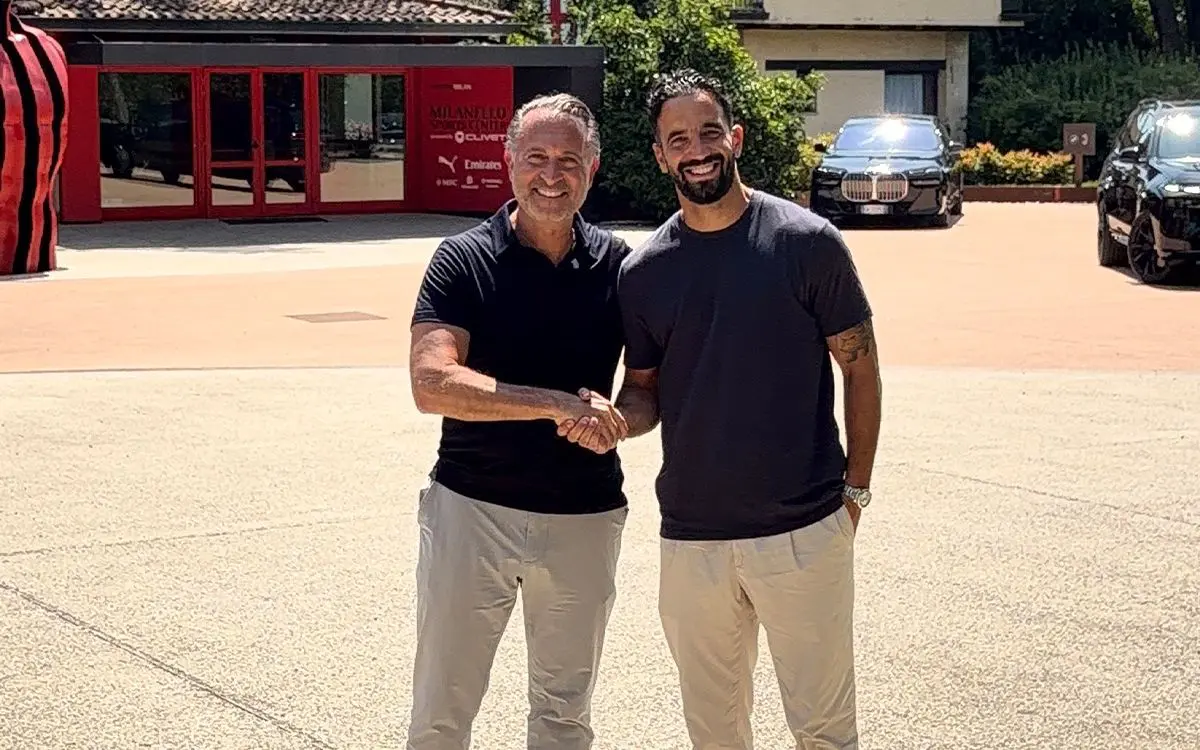
Are you having fun?
“They keep asking me questions like, ‘Are you having fun? Are you happy?’ My answer is a mixed one: I’m happy when we win, I enjoy it when we win, and right now we’re not winning enough.
“That said, this has been by far the most difficult challenge I’ve ever faced in my life, and I love challenges of this magnitude. The implications of a success here are monumental, and the ripple effect it would have for the local community, the country, the league, and the entire football landscape would be truly profound.
“The stadium, to give a concrete example, sends a message to the world and to international football of primary importance, particularly for Serie A and for Italy, precisely at a time when the movement isn’t performing up to its glorious tradition.
“For us, being able to position ourselves as a global leader with an infrastructure of this kind and with what it represents for the future is a fundamental objective.”
Do you intend to move forward by personally managing every aspect of the club, or do you think the club and the sports structure need a strong management figure, a technical director?
“That’s a great question. I wanted to clarify two key points. First, I will never hand over the keys to anyone again. From now on, I will always be operational and present in person. This is too important, and I can make too great a contribution, for that not to be the case.
“Second, however, is that I intend to do what I do best: one of my main tasks is organizational design, and our goal is to build a world-class football organization.
“Given what we represent and AC Milan’s history, we must be able to attract the best professionals on the market, and that’s exactly what we will do. So, we will continue to do both.”
Do you already have a specific name or profile in mind?
“It’s a question I get asked all the time. But it’s not just about naming names, and it’s curious how in football discussions, people always look for scoops on individual figures. I say that what really matters is the planning, the organizational architecture, what we’re building.
“As for names, I can only say that yes, I have some profiles in mind, but they will only become operational within and in accordance with the corporate model we’re designing, and that’s what I’m totally focused on.”

Do you also have player names in mind? Is he becoming increasingly expert in the art of selecting and acquiring players?
“Well, yes. If you’d told me a year ago that I’d be spending my time watching videos, interacting with scouts and our technical staff, I’d have been quite surprised, but it’s something that’s gotten under my skin now.
“The learning curve has been incredibly steep, but then again, if you look at what I’ve done with RedBird and throughout my career, it’s always been about building organizations made up of top-notch people.
“It means knowing how to negotiate, knowing how to manage financial considerations, making sure people are all pulling in the same direction to achieve the set goal. That’s exactly what football thrives on, and that’s what determines its success.
“It’s no different from what we do in the corporate world. It’s about doing things the right way, building a solid organization: and it’s not enough to win, it’s not enough to have a big name at the moment, you have to do it consistently.
“It means creating a structure that can constantly evolve, because the world doesn’t just sit back and wait for you. The Premier League will continue to grow stronger, and our job is to is keeping up.”
Looking back, how do you evaluate these four years at Milan? What were the things you did well, and what were the mistakes you wouldn’t repeat?
“Hindsight is wonderful, as we all know. If I could start over again, I’d like to have the same awareness I’ve gained over the past four years. When we bought the club four years ago, it had just won the Scudetto, and I thought the sporting and footballing aspects were already in place and working perfectly; so I focused on other priorities, like the new stadium and commercial development.
“The reality is that you have to take care of both things simultaneously, and you can’t take it for granted that the pitch is in order. So, if I could go back, as steep as the learning curve was, I would have dedicated the same amount of time to the sporting aspect from day one as I am now.
“But the advantage of having taken this path is that today I perfectly understand what needs to be done. The time I spent this summer personally managing the club gave me the opportunity to understand exactly which roles to include in the new technical area structure.
“I would take care of the commercial side with my eyes closed; the world of football, however, has its own art and science component, and now I’ve finally climbed that ladder. learning curve. Putting these two elements together, the sum of the parts will be significantly greater than the whole.”


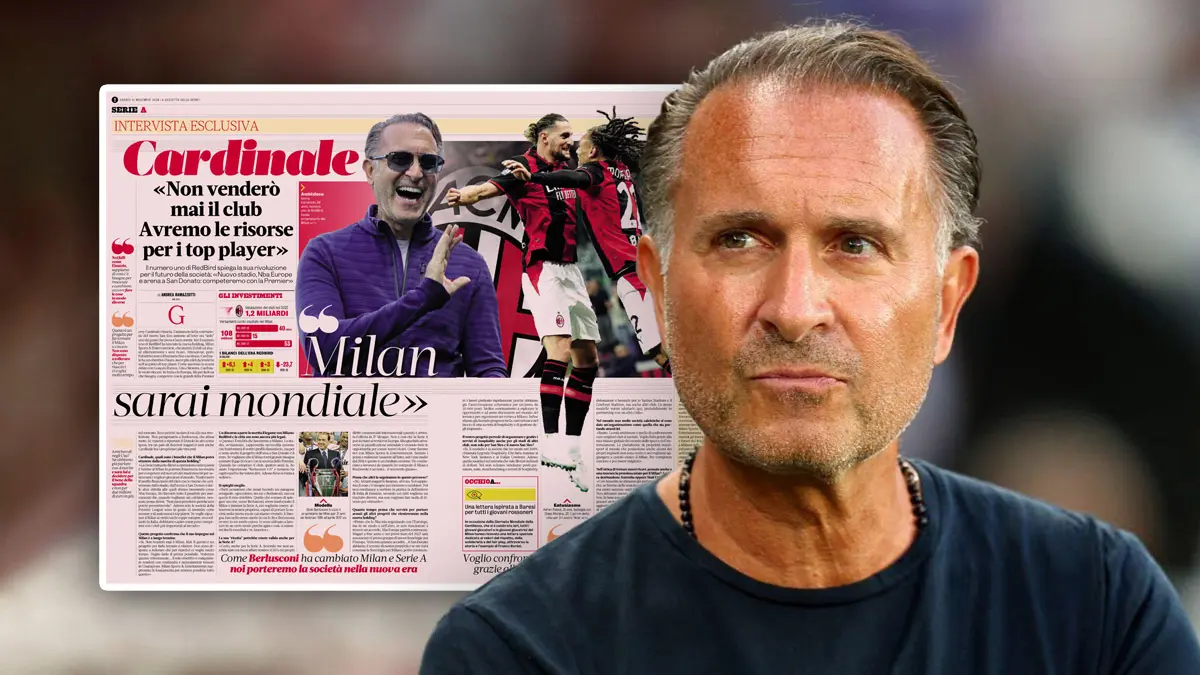

“When we bought the club four years ago, it had just won the Scudetto, and I thought the sporting and footballing aspects were already in place and working perfectly; so I focused on other priorities, like the new stadium and commercial development…
So, if I could go back, as steep as the learning curve was, I would have dedicated the same amount of time to the sporting aspect from day one as I am now.”
What?? Does this mean he’s fire Maldini sooner?
The sporting and footballing aspects were indeed working perfectly. Gerry mucked it up by firing the guys who sent the team to a UCL final that same year. And he thought things weren’t working well? Ok , not perfectly. But since then, it s been abysmal. His ego just doesn’t allow him to fess up to the 💩 show that has happened since under his watch and his decisions. He decided these things and now pretends he’s finally making them. He put the rat in charge. He allowed them to run the club disastrously from a sporting perspective
Maldini stated that when he asked Cardinale why he was being let go, Cardinale told him he had a bad relationship with Furlani
Maldini questioned the rationale, asking Cardinale, “Have I ever called you to complain about Furlani? Never.
Maldini also had a bad relationship with Gazidiz as well.
Elliot who were the onwers of Milan and where Furlani came from wanted Maldini gone sooner. They didn’t want to offer him new contract and let the existing one expire. Cardinale was the one that gave Maldini a new contract, but the club was still mostly run by Elliot and Furlani as a CEO.
Maldini wanted Pioli fired, Furlani disagreed.
So no, it wasn’t working perfectly.
Maldini wanted the club to spend more money and was in a bad relationship with the ones who didn’t. He got fired the same week he had the interview with CBS sports where he said it was vital for the owner to spend more if the club is gonna take the next step.
Admit or not. We were very lucky to win that year. Pioli himself admitted that he started to believe after Ibrahimovic took it to himself to keep players in check. And it still required almost a miracle to win. Inter learned their mistakes. We didn’t. Simple as that. We needed a lot of reinforcements and the management failed. That team was not going to win another.
The incredibly steep learning curve from just one year ago:
Yes, Mr Cardinale, every time the ball goes in one of those big posts, it’s called a “goal.”
He has “great respect for the history and culture of AC Milan”… then proceeds to field the least italian Milan in history. Amazing. Gtfo plz.
He fields the players?
The entire league has less Italian players.
The reason why there are less Italian players fielded because Italian players are doo doo. I think Italy already missed 2 world cups in a row before he came to Milan.
The rumor has it that Cardinale was the reason why Baggio missed the penalty in WC final.
Glad to see they asked hard-hitting questions like, “are you having fun?”
They just sell players
How people are so.blind ????
They’ve sold Pavlovic, Rabiot, MM16, Pulisic and Bartesaghi, right?
Last time I checked, every club sells their players. Unless they’re banned from the market for breaking the rules. Also, I believe Milan spent the 2nd most money in the summer market in Italy. So… Does that mean the other teams in Italy buy even less? I’m confused. Please educate me. 🤔🤷♂️
“world of football, however, has its own art and science component, and now I’ve finally climbed that ladder. ”
He thinks he learned it all lol. This is why we are in trouble.
Mr. Gerry…I don’t know what you want yo achieve and I don’t care to be honest. I told you what we…the Milan fans want to achieve. Some trophies ! As many as possible…
Since you always choose the inappropriate persons at the managerial level, you have learned anything