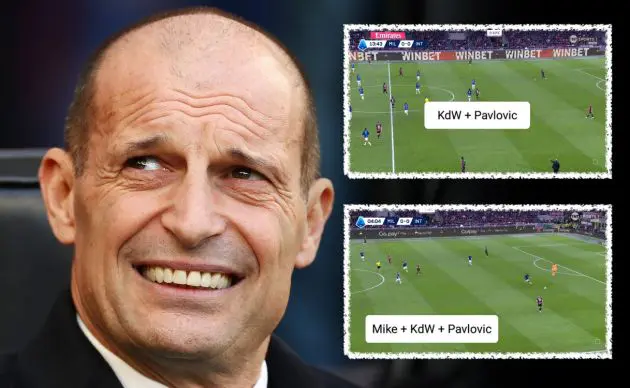
Massimiliano Allegri is one of Italian football’s greatest ever strategists, and he has demonstrated it with AC Milan this season.
Read SempreMilan ad-free and get access to exclusive news. Click here for a free trial!
The accusations levelled against Allegri are familiar by now. He is pragmatic, he is tactically rigid and at times he is negative. Yet, one thing that cannot be argued with is that he often produces results through his tactical intuitions, like on Sunday when he beat the Inter machine for the second time.
One of the most intriguing aspects of the 3-5-2 that Milan have been using almost exclusively this season is the build-up shape. In football formations are often an over-simplification, because the shapes and numbers shift according to game situations.
To understand Milan’s progression structures, Rohit Rajeev has examined how Milan built up against different opponents, from Inter to the likes of Roma and Bologna. Each game presented a different pressing scheme, revealing how Milan adapt their build-up to the opposition.
What is the significance?
Why is build-up structure important? After all, it is usually the point where possession is in the least dangerous area for the opposition. Well, it actually reveals a lot about how a team and a coach intend to play.
A build-up structure is the deliberate positional framework a team uses to progress the ball from their defensive third into more advanced areas. It is ‘phase one’ in a lot of attacks, and reveals the habits that have been worked on during training.
When done right (and Allegri is a master at it), it can manipulate the opposition’s press by having players drop in or push up to drag a man with them. Essentially, the build-up phase is where traps are laid to try and force the other team out of their plans.
It also often sees the goalkeeper involved as the ’11th man’, and as we know Mike Maignan is very good with the ball at his feet. In addition, the right profiles in midfield and defence (think Luka Modric and Koni De Winter) can demonstrate their line-breaking passing.
In short, the build-up structure sets the tone. It is the opening move in the chess match, which Calcio often descends into given the cagey and tactical nature of games.
The derby
Against Inter, Koni De Winter remained the fixed member of Milan’s back line, while Strahinja Pavlović and Fikayo Tomori alternated as the second centre-back stepping forward during build-up.

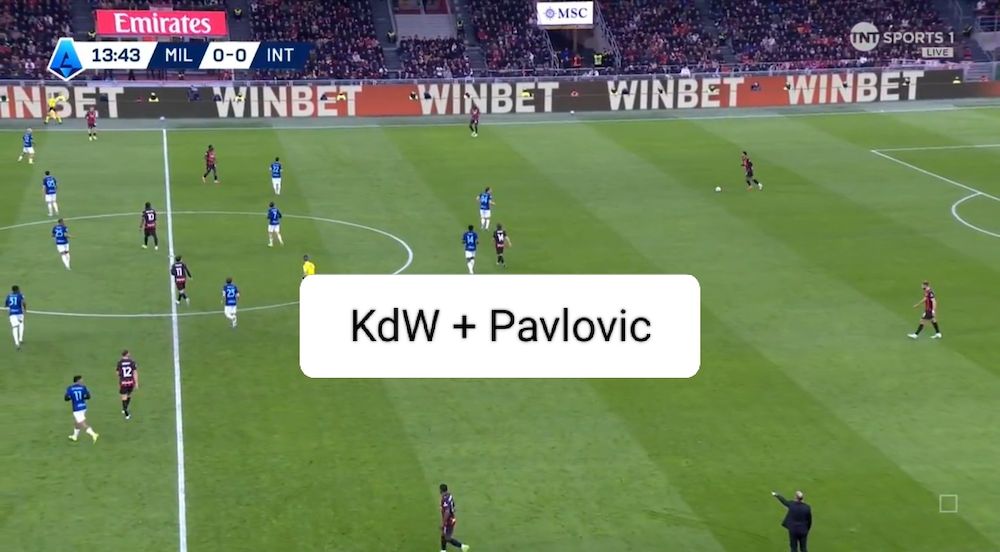
This rotation created slight positional shifts in the first line, which helped stretch Inter’s central pressing structure under Chivu.

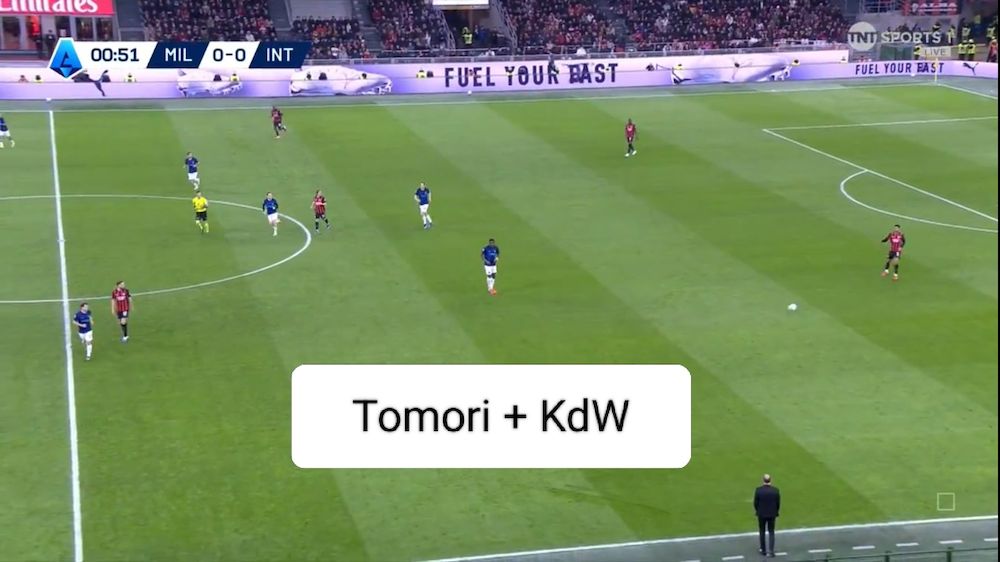
By varying which defender advanced, Milan were able to disrupt Inter’s central overloads and create better passing lanes through the first phase of build-up.

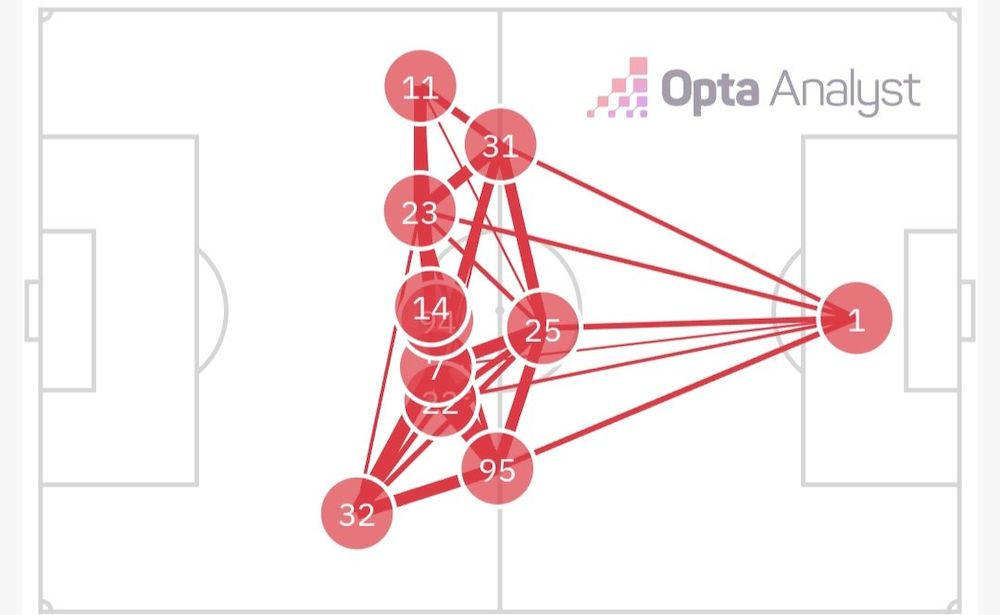
When Inter settled into a mid-block, Milan adjusted their build-up by having either Luka Modrić or Adrien Rabiot drop into the back line to form a temporary back three.

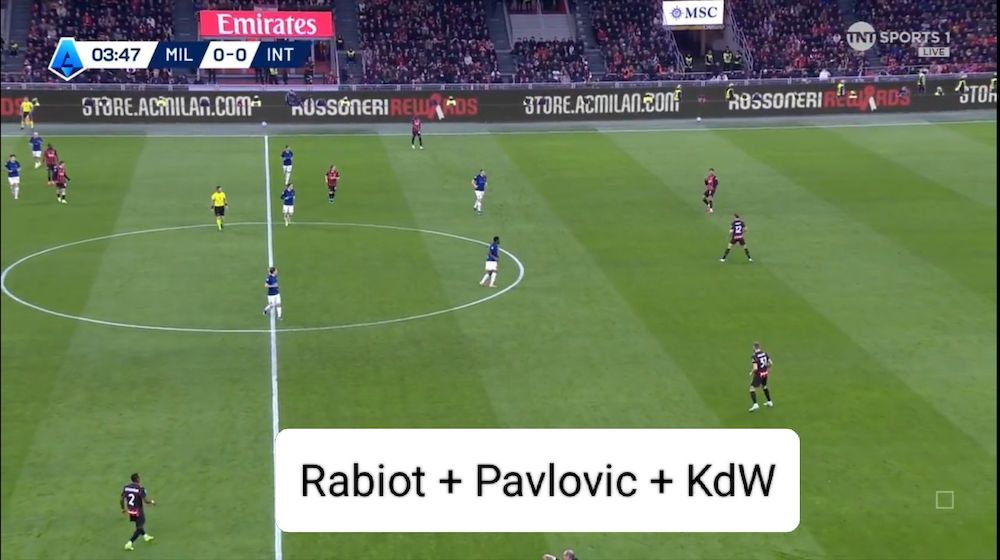
This deeper positioning helped stabilise circulation and encouraged Inter’s midfield line to step forward. At the same time, Christian Pulisic, Rafael Leão and occasionally Alexis Saelemaekers held advanced positions to pin Inter’s defensive line in place.

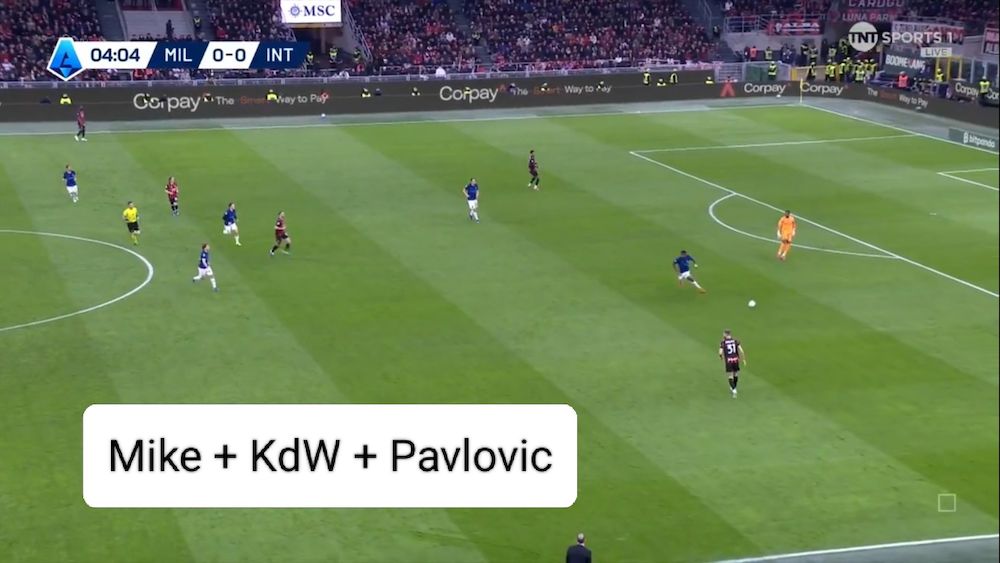
By preventing the back line from squeezing up, Milan were able to maintain and exploit the space that emerged between Inter’s midfield and defensive lines.
Other opponents
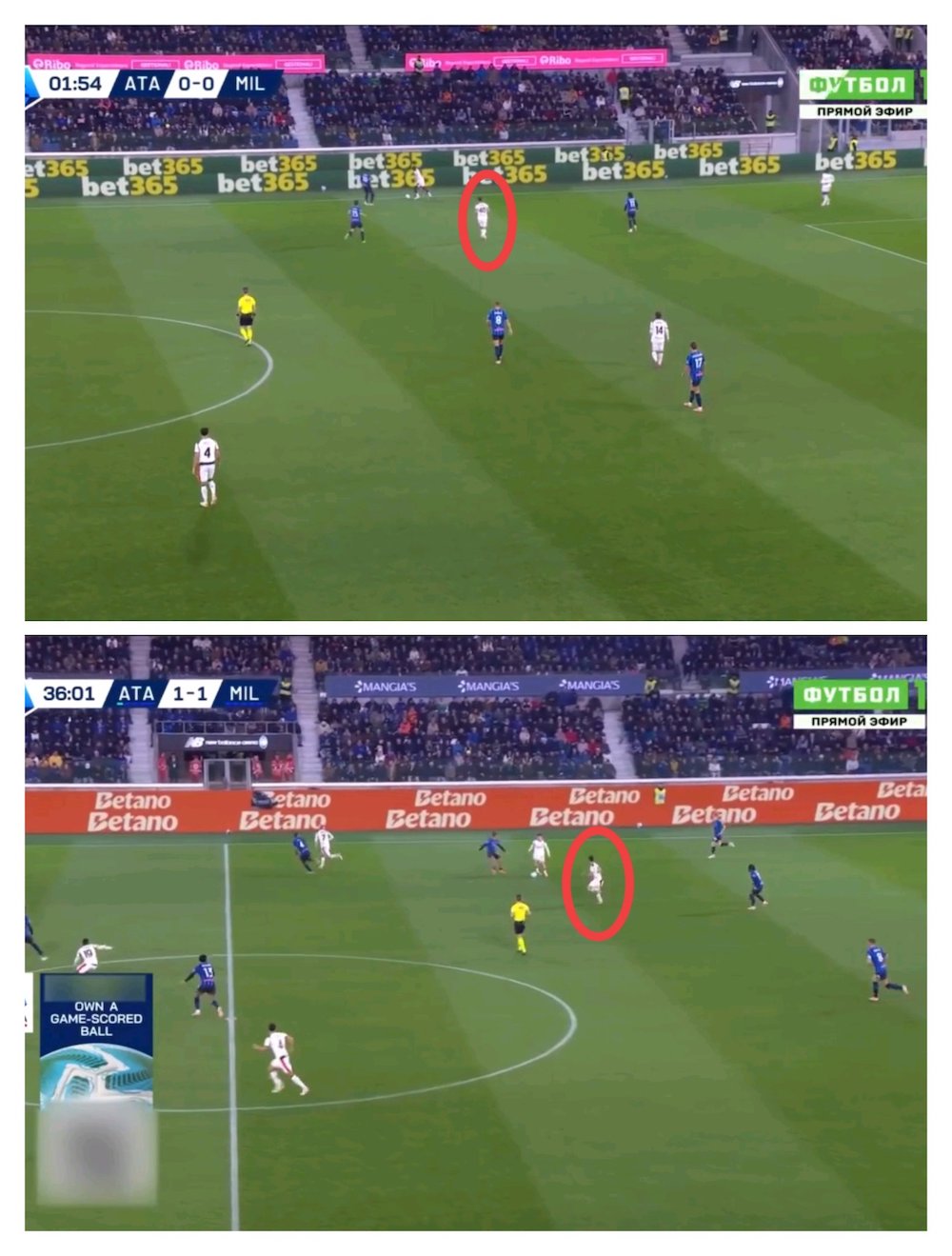
When facing teams such as Roma, Atalanta and Bologna that pressed aggressively higher up the pitch, Allegri introduced a different build-up solution by inverting MatteoGabbia from centre-back into midfield.
Gabbia would step into the space between the opposition’s first and second lines of pressure, positioning himself as an additional passing option.
This movement created a numerical overload in the central corridor and helped Milan bypass the initial press more effectively.