
AC Milan left it right until the end against Cremonese on Sunday at the Stadio Giovanni Zini, but ultimately emerged with all three points.
Read SempreMilan ad-free and get access to exclusive news. Click here for a free trial!
Rafael Leao and Christian Pulisic each missed big chances to put Milan ahead in the first half, and it looked like being one of those familiar frustrating afternoons against a side towards the bottom end of the table.
However, Strahinja Pavlovic was there to guide in a cross in the last minute of normal time to put the Rossoneri 1-0 up, then Rafael Leao finished a counter to ensure a 2-0 victory. On a weekend in which Inter and Napoli also emerged victorious, it was vital to get back to winning ways.
Set-ups
Massimiliano Allegri chose to make two changes to the starting line-up from the team that lost to Parma one week ago. Strahinja Pavlovic came back into the defence, replacing Pervis Estupinan with Davide Bartesaghi pushing back up to wing-back. Youssouf Fofana came in too, taking the place of the injured Ruben Loftus-Cheek.
Because Saelemaekers operates higher up the pitch than Bartesaghi, Tomori is frequently forced to step out of the defensive line to engage and suppress the developing attack. This movement disrupts the back line’s structure and leaves exploitable space behind him, which Maleh has been specifically instructed to attack and penetrate.

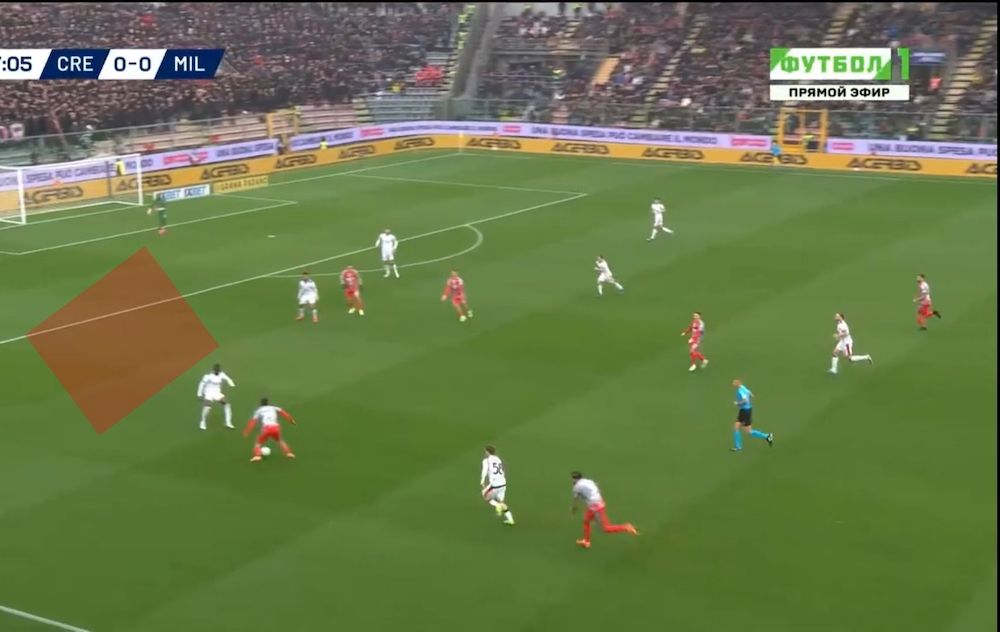
Cremonese maintained a compact, deep defensive line, attempting to deny space in behind. In response, Rabiot and Fofana looked to stretch that structure by timing penetrative runs beyond the back line.
Although Rabiot was caught offside on one such occasion, similar movements in other instances successfully disrupted the defensive block and generated shooting opportunities for Milan, including efforts on target.

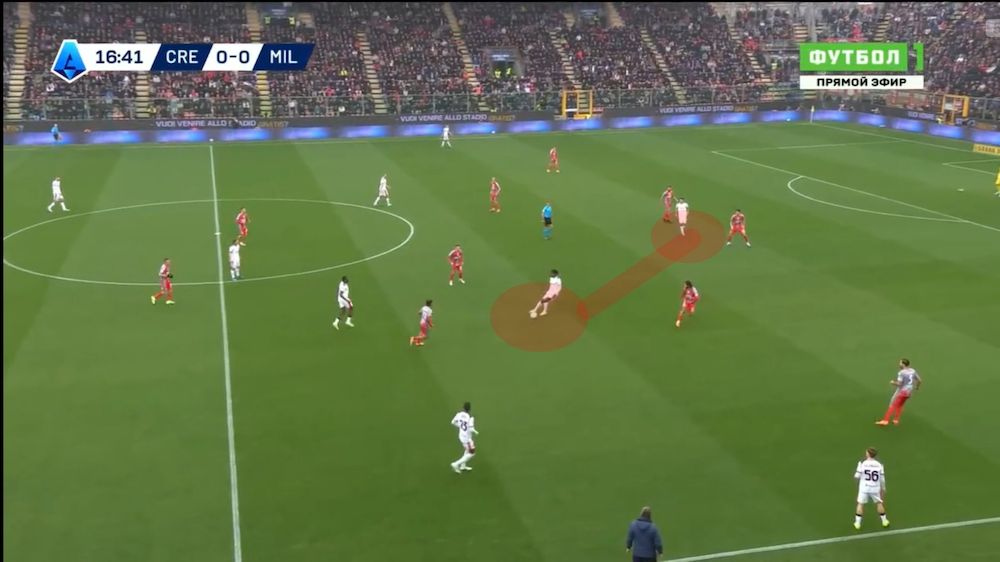
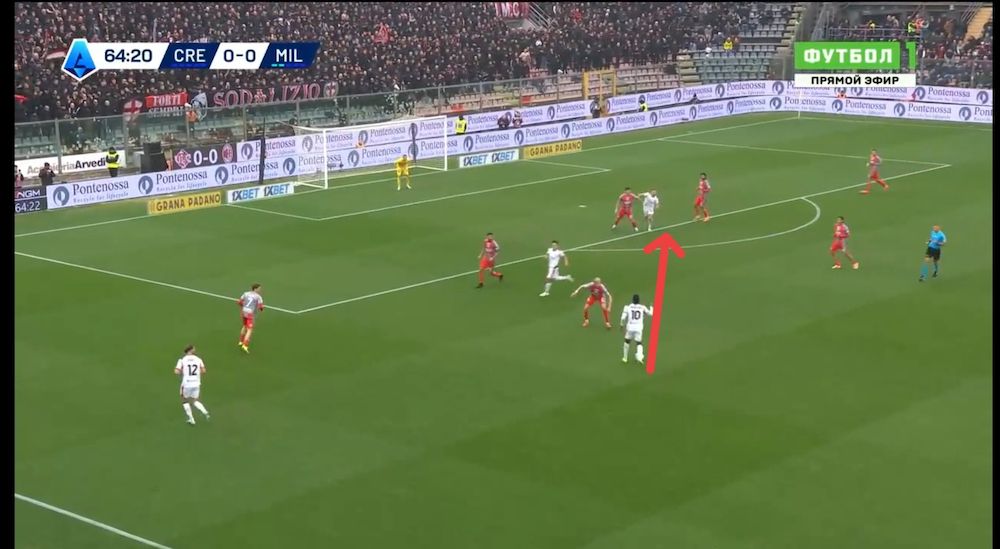
Leão and Pulisic have gradually begun to synchronise their movements in the final third. When Leão drops deeper to receive and facilitate progression, Pulisic holds a higher position to pin the defensive line, preventing it from stepping up. This co-ordinated staggering creates exploitable space between the lines and enhances Milan’s capacity to access central zones with control.
Nicola’s approach
Cremonese structured their possession in a 3-4-2-1, with Maleh and Thorsby operating in the half-spaces behind Vardy to provide vertical support and second-line presence. Vardy consistently looked to peel into the channels, drifting to either side of Koni De Winter to isolate a centre-back.
Given the pace differential, Tomori was tasked with tracking Vardy’s runs and engaging him early to prevent separation in transition.

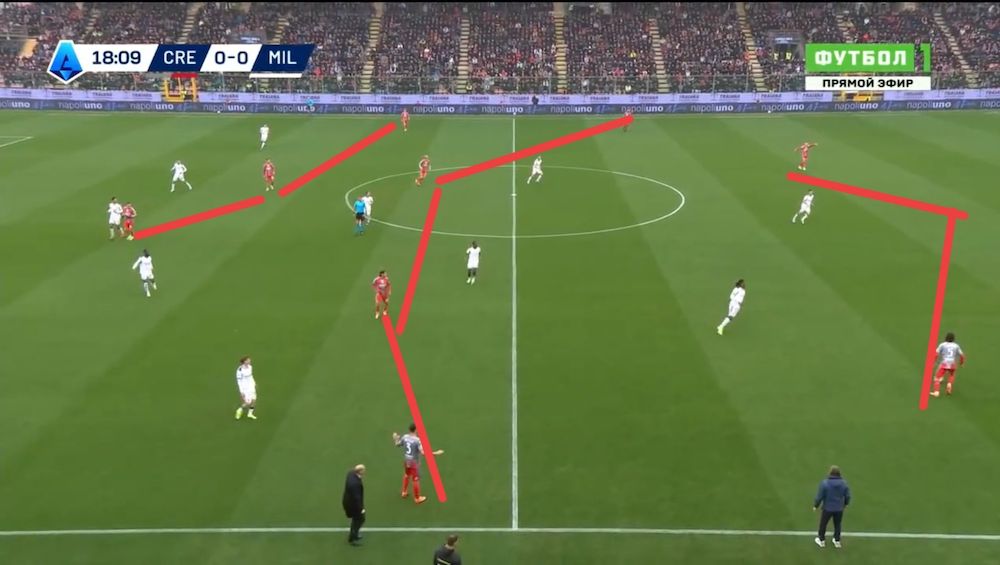
Cremonese identified Fofana as the primary trigger for their counter-pressing phase, with Davide Nicola clearly instructing his side to collapse on him immediately upon turnover. Given Fofana’s tendency to take additional touches and his susceptibility to conceding possession under pressure, he was deliberately targeted as a pressing trap.
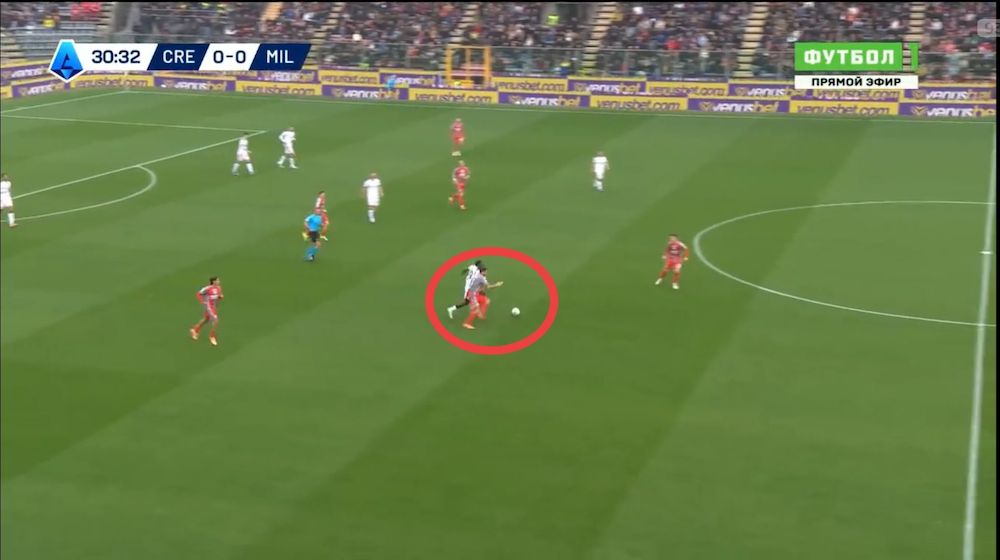
However, rather than relinquishing the ball cleanly, Fofana frequently absorbed contact and drew fouls, thereby disrupting Cremonese’s counter-pressing rhythm and relieving pressure for Milan.

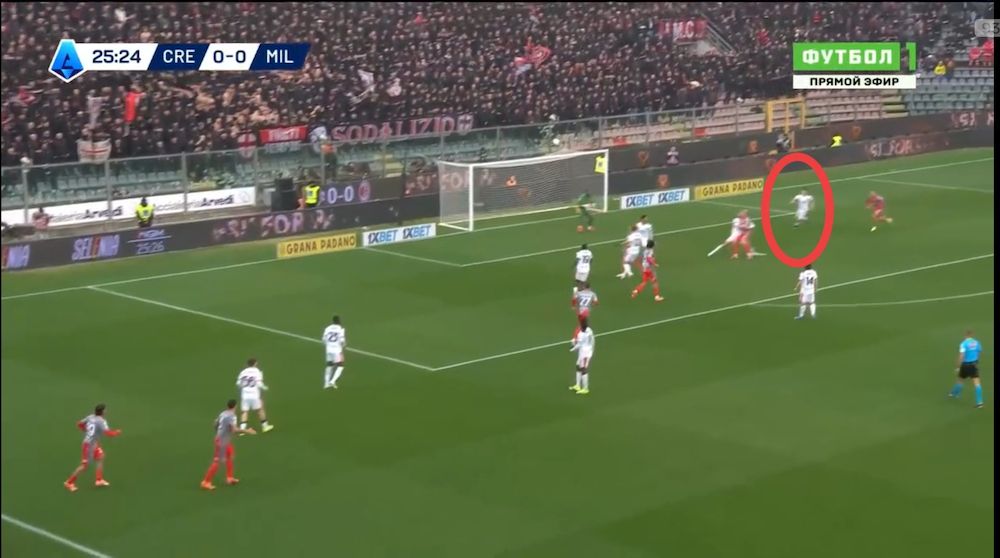
Cremonese’s most significant opportunity emerged from a deliberate overload on Milan’s right flank. As the defensive unit naturally shifted laterally to compress that side, the far side became exposed, leaving Bartesaghi isolated on the left.
Preoccupied with the ball and momentarily losing awareness of his direct opponent, he allowed Bonazzoli to exploit classic striker movements, darting across his blind side to attack the near space. Bonazzoli managed to get in front and strike at goal, but ultimately failed to convert the chance.

The wrong decisions
In analysing Milan’s missed chances, decision-making in high-leverage moments proved decisive.
Leão, when presented with a narrow shooting window, appeared caught between execution options, opting for something between a toe-poked finish and a lofted effort.
The hesitation in that split second compromised his technique and contact quality, resulting in a rushed, ineffective attempt rather than a composed finish.
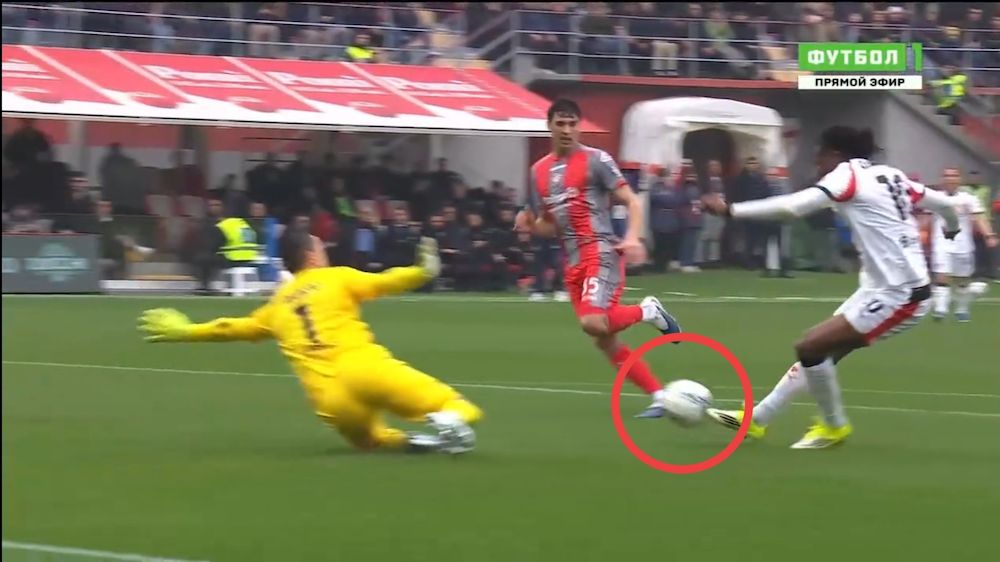
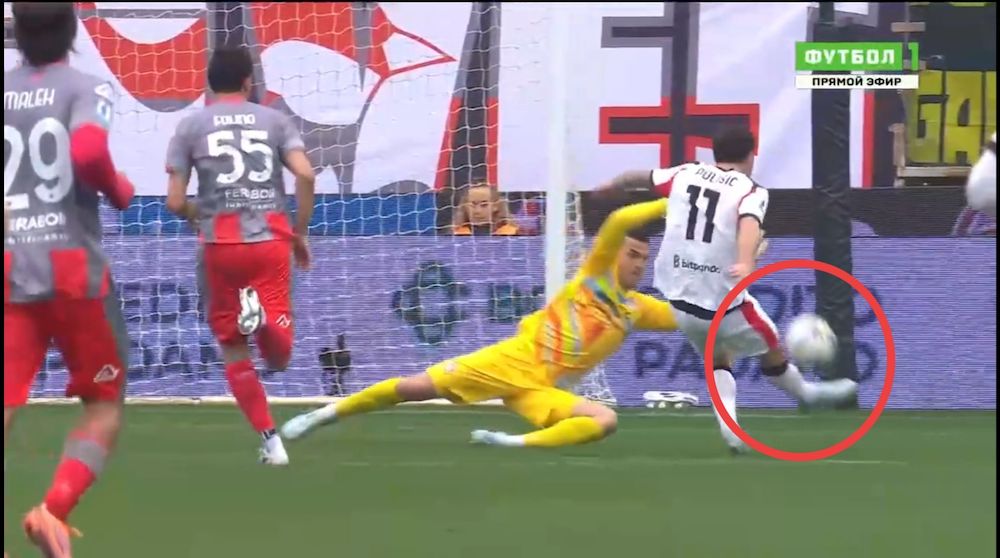
Pulisic, by contrast, struck his effort cleanly, but the spatial context worked against him. He was too close to Audero, reducing the effective shooting angle and increasing the goalkeeper’s probability of intervention.
From a tactical perspective, the higher-value action may have been a square pass to Leão, who was positioned to finish with a clearer sight of goal and a superior angle.
A crucial change
Allegri’s second-half adjustment – introducing Füllkrug and shifting to a 4-3-3 – materially altered Milan’s attacking structure. The presence of a fixed central reference point allowed Leão and Pulisic to operate with clearer vertical relationships.
Füllkrug functioned as a true hold-up centre forward: pinning centre-backs, absorbing contact, and setting the ball into the path of onrushing wide attackers. This created cleaner third-man combinations and more stable progression through central zones.
For the second goal, his spatial intelligence was decisive. Rather than remaining high, Füllkrug dropped into a deeper pocket to receive, drawing a defender with him and momentarily disorganising the back line.
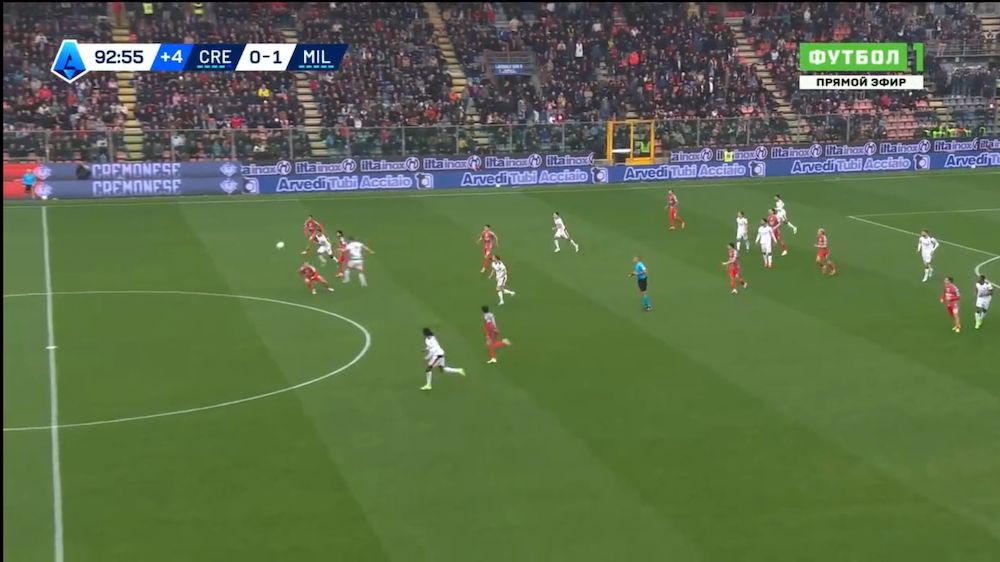
As he did so, Leão and Nkunku exploited the vacated depth by making penetrative runs beyond him – a classic vertical staggering pattern – which destabilised the defensive line and enabled the final action.

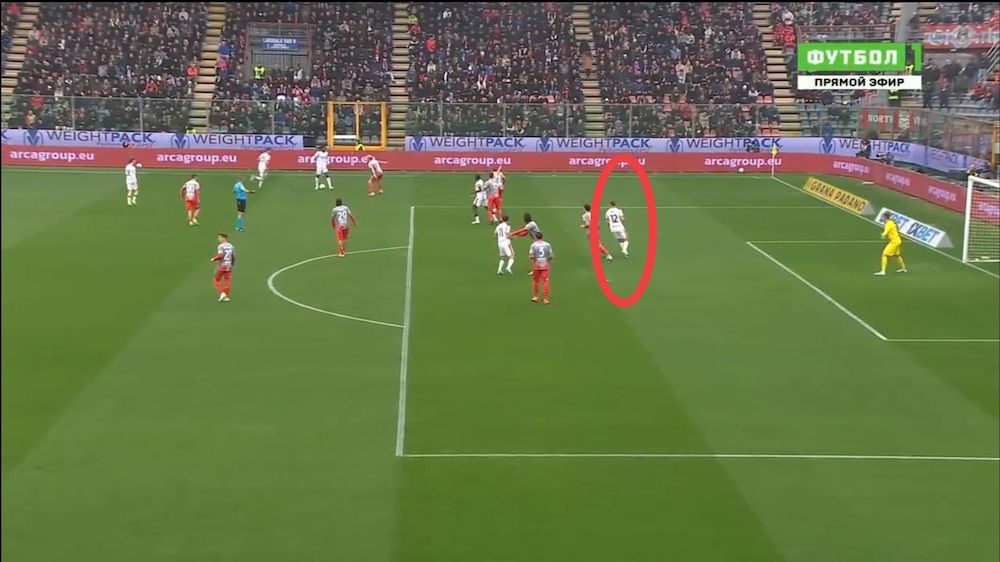
Cremonese operated with a zonal marking scheme on set-pieces, maintaining positional references rather than tracking individual runners. To manipulate the delivery angle, Modrić initially positioned himself off Estupiñán, creating a cleaner corridor for the strike.
From this adjusted vantage point, he delivered an out-swinging cross, which naturally bent away from the goalkeeper and targeted the far-post zone, an area typically vulnerable against zonal systems if the timing of attacks is precise.
Pavlović, who was initially stationed adjacent to the goalkeeper to occupy that critical space, subtly shifted into the defensive line at the point of delivery. That movement altered the screening dynamic in front of the keeper and influenced the contest for the far-post ball.
— Rohit Rajeev (@RohitRajee23232) March 3, 2026
The data
The key difference compared to the first meeting with Cremonese was their defensive line height. In the earlier fixture, after Baschirotto handed them an early lead, they retreated into a lower block and prioritised compactness.
In this match, however, Cremonese held their line roughly 10 metres higher up the pitch, indicating a more proactive approach out of possession and a greater willingness to compress space in midfield rather than defend deep from the outset.
As always, MarkStatsBot has some interesting takeaways from the game. The passing network reveals more about the shape in possession and the relationships between players. It clearly demonstrates that the passes were going into Leao from midfield or out to the wing-backs, not into Pulisic.
The midfield three remain rather compact in the centre, with Pavlovic stepping out more as the outlet leaving De Winter and Tomori to anchor the defence.


There is little to add about the below other than that even when it seems that Modric has a ‘quieter’ game, he is still a ridiculously efficient ball progressor.


Despite his precarious physical condition, Leao seems to be a magnet to the action at the moment. This is demonstrated by the Expected Threat graph, showing the danger that results when a player gets the ball, with the Portuguese leading the way by a huge margin. In other words: get Rafa the ball, and things often happen.

