
AC Milan have not been a success on the field under RedBird Capital, and it has forced them to reflect on their methodologies.
Read SempreMilan ad-free and get access to exclusive news. Click here for a free trial!
La Gazzetta dello Sport begin a report by talking about the battle between the business and the sporting sides of a football club. On the one hand there is the need to be financially healthy, but on the other hand the demands for results will always be there at a club like Milan.
The two sides of the moon must necessarily coexist and work together. If there is one thing that Milan has learned – at its expense – in recent years, it is that management guidelines cannot always travel above everything else.
They must be there, of course, but sometimes there is a need to remodel based on the club’s situation. After the financial collapse of the Chinese-led club, it was first necessary to give the Rossoneri a credible financial structure for three reasons.
Firstly, they were necessary to protect Milan from UEFA sanctions. Secondly, to clean up the accounts with a view to a future sale and, thirdly, to be able to afford to strengthen the team. Elliott Management came in and did that very well.
Between Elliott and RedBird, financial virtuosity has been successful and the accounts have returned to being profitable after seventeen years of red. Now, however, other needs are coming in because the model – as it was set up even just three or four years ago, no longer holds up.
In the sense that the lack of sporting results is generating losses, lost revenue, players who are grateful for the adventure and settle down where they can have everything right away. And so it is a model that is transforming.


The need for balance
The first thing that catches the eye is the ages of the players. One of the most ‘famous’ mantras was to only sign players that are under 25. With some due exceptions, of course, as was the case for Ibra and Kjaer for example.
The idea was – and, basically, still is – to bring in relatively young players, good but not too well-known, and who could generate potential capital gains. The passage of time has made it clear that without some senators it is very hard. That’s why Giroud and Florenzi arrived, for example.
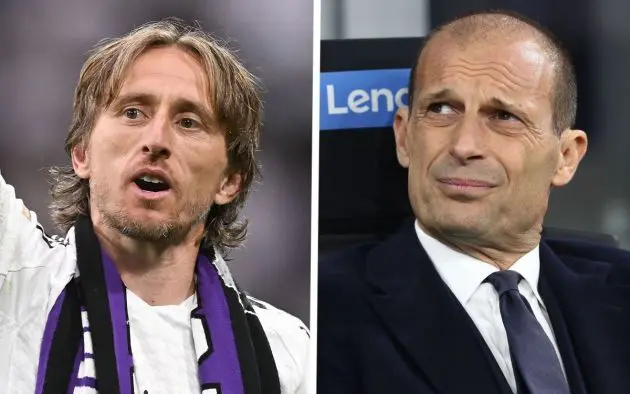
But it is especially this year that the issue stands out particularly. In theory, the midfield of the 2025-26 season could be made up of Modric, Xhaka and Fofana. Apart from the Frenchman, who is 26, we are talking about players who in September will turn 40 and 33 respectively. There was also talk of Rabiot, who is 30.
Witnessing a similar scenario would have been unthinkable until a few years ago. Of course, we are not one step away from that instant team that the ownership basically sees as almost football blasphemy, but in recent times the orientation has changed.
On the other hand, last season was not simply a bad season. It was disastrous, and to start again a break from the past is needed because repeating the exclusion from the European competitions would have dramatic financial implications.
Therefore, it is necessary to sign a wise mix of 25-year-olds with good potential and experienced players who know how to take charge of the dressing room.

Experience is golden
Another radical change has occurred at the management level. Milan, for a culpably long period of time (a fault informally acknowledged even within the club), has in fact managed itself without a sporting area.
Or rather: without figures who had specific experience in this regard. The results were there for all to see and the ownership rushed to remedy the situation – well behind schedule – by hiring a ‘traditional’ sporting director.
Then there is the part relating to salaries. If until some time ago the market operations and renewals had as their guiding star an indicative ceiling – however never made official and declared by the club – of around €4m net per season, with very rare exceptions, now the parameters are less rigorous.
This does not mean squandering money, but in the presence of particularly important and functional signings or renewals, it can be raised.
Finally, there is also another change in philosophy. Which cannot be radical, but is still a signal: the attempt to re-Italianise Milan, also because the US model is not superimposable to the needs of our football.
And so: Allegri on the bench, Tare (now basically an Italian) at the helm of the sporting area, names like Leoni, Comuzzo and Lucca on the management’s notebook. Transition underway in the home of the Diavolo, in search of the best business model.