
AC Milan beat Inter 1-0 at San Siro on Sunday night and recorded their first league derby double over their city rivals in 15 years.
Read SempreMilan ad-free and get access to exclusive news. Click here for a free trial!
Just like in the first meeting back in November, one goal was enough to decide the bragging rights, and this time Pervis Estupinan was the perhaps unlikely hero. He ran onto a great through ball from Youssouf Fofana and sent a shot into the top corner past Yann Sommer in the 35th minute.
Another stoic defensive effort in a big game followed from the Rossoneri, who withstood late pressure from the Nerazzurri but rarely looked like conceding. It means the gap at the top is cut to seven points, and Milan also ended the Nerazzurri’s unbeaten run at 15 games. Rohit Rajeev has the tactical breakdown.
Set-ups and shape
Massimiliano Allegri made one change to the starting line-up from the win over Cremonese one week ago. Pervis Estupinan came in at left wing-back with Davide Bartesaghi on the bench, given he was not at 100% having limped off in the last game.
Cristian Chivu meanwhile also stuck with a 3-5-2 system, one that was spearheaded by the rather untested pairing of Pio Esposito and Bonny. Lautaro, Thuram and Calhanoglu were out leading to a remodelled spine, while Akanji anchored the defence and the in-form Dimarco started on the left.
Milan adopted an aggressive high press against Inter in the derby, reflected in a first-half average defensive line height of 52.58 metres.
The approach appeared data-driven: according to Opta, Inter had been losing possession in dangerous areas an average of 29 times across their previous five matches. By pushing the line higher and compressing the pitch, Milan aimed to capitalise on those turnover tendencies and recover the ball closer to Inter’s goal.

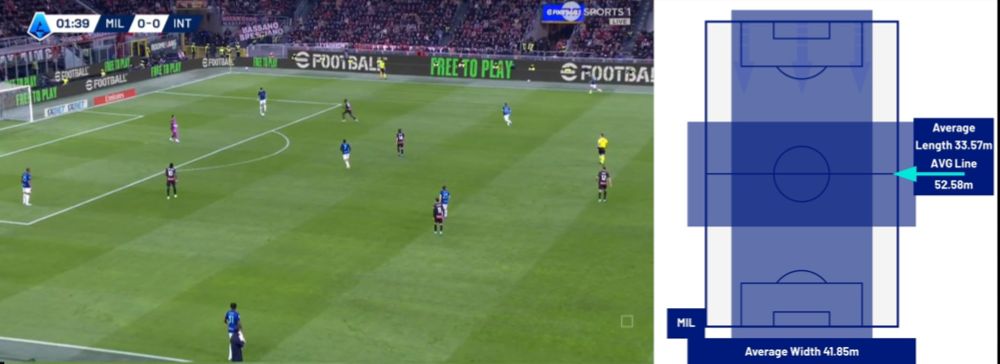
Milan aimed to restrict Inter’s wide build-up patterns by aggressively matching numbers on the flanks. Whenever the ball moved toward the touchline, Milan shifted across and overloaded those zones, creating 4v4 or even 5v4 situations.

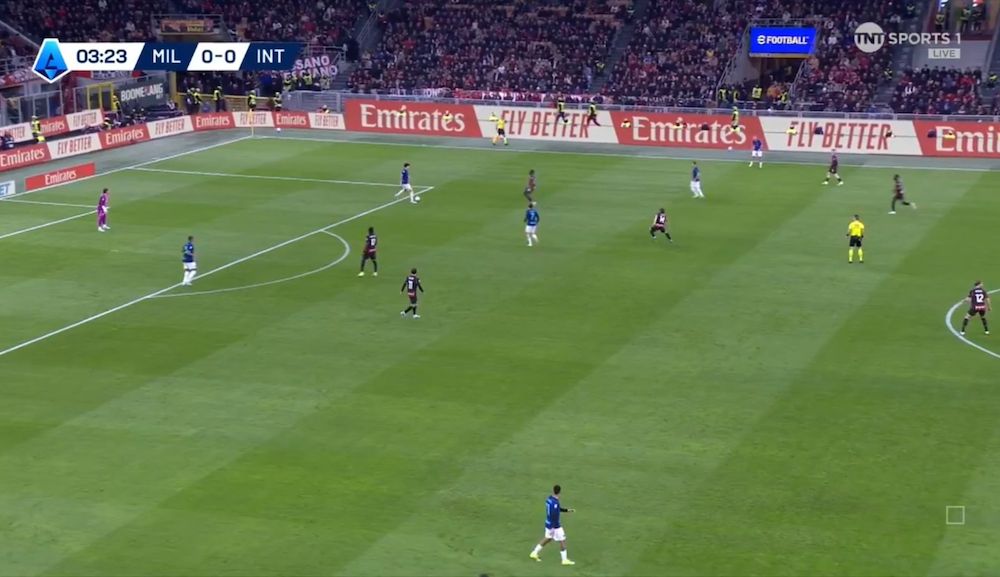
This numerical matching limited Inter’s ability to establish their usual wide overloads and reduced the effectiveness of their progression down the wings.

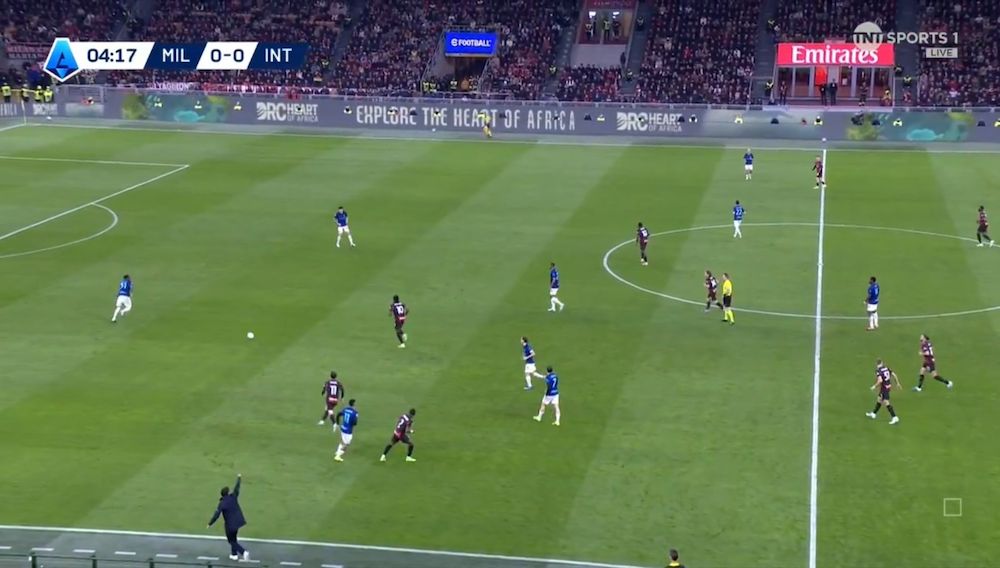
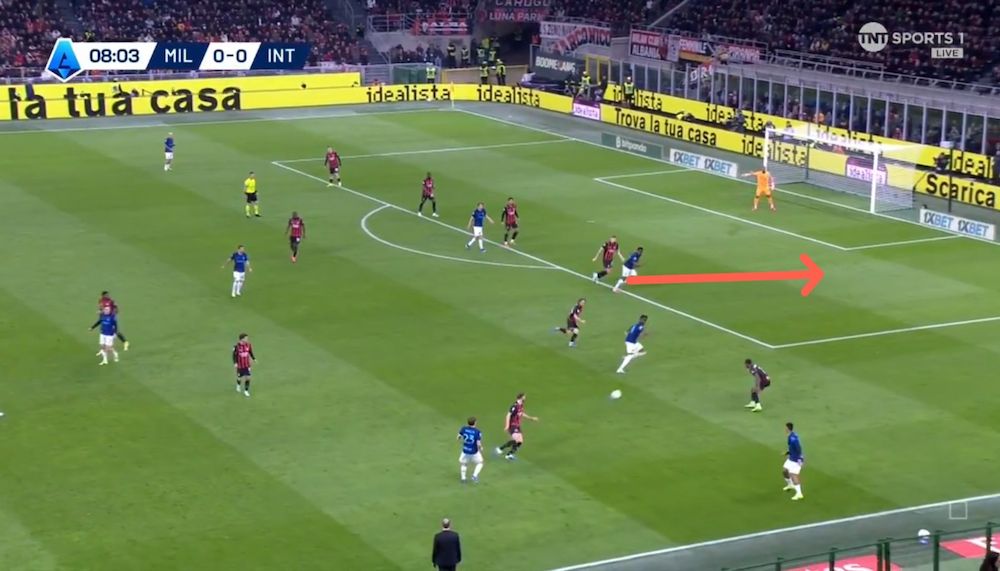
Inter relied on classical wing play, a dynamic made viable by Bony’s consistent runs in behind Milan’s defensive line. His vertical threat forced the back line to drop and stretch the defensive structure, creating greater depth between lines.
This vertical stretching opened the channel for Barella to execute his characteristic in-to-out runs from midfield, arriving into the wide spaces with momentum and exploiting the defensive disorganisation.

Defensive adjustment
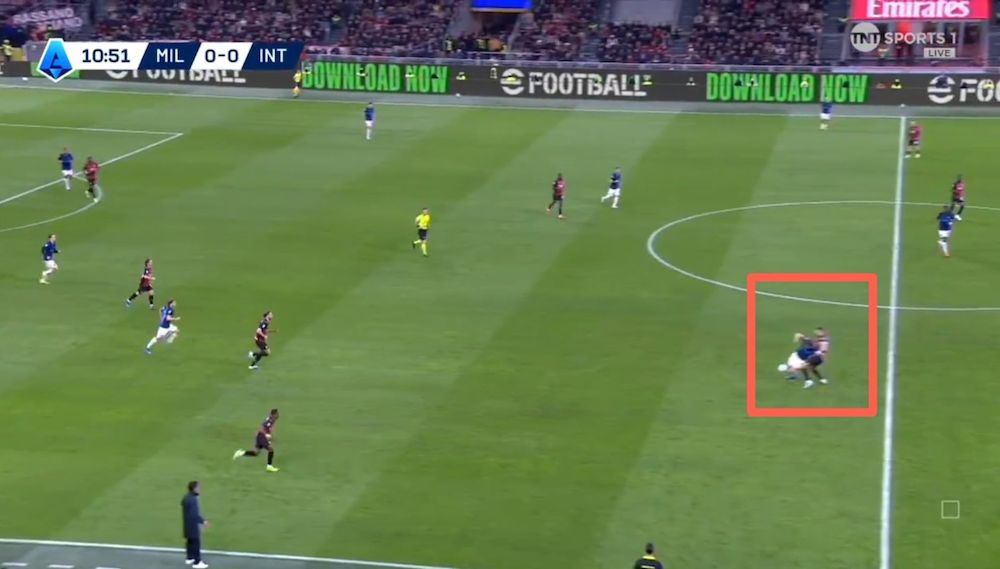
Milan deliberately targeted Pio Esposito during Inter’s build-up phase, with either Koni De Winter or Pavlović stepping out of the defensive line to engage him aggressively.
The rationale was data-driven: Esposito has averaged close to five possession losses per game this season, making him a potential pressing trigger. By jumping out early to challenge him, Milan attempted to force turnovers and disrupt Inter’s progression before they could establish stable possession.

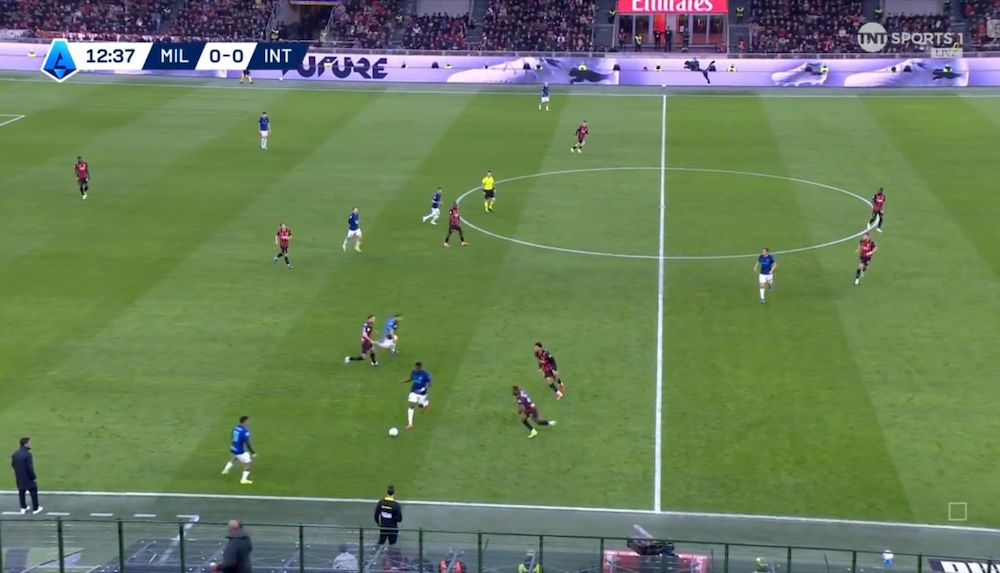
In classic 3-5-2 fashion, Bony frequently dropped deeper to receive the ball before drifting toward the flanks. This movement pulled Milan’s defensive line and midfield structure out of shape, vacating the central channel.
The resulting space allowed Barella to time penetrative runs beyond the last line of Milan’s defence, attacking the depth created by Bony’s withdrawal from the forward line.

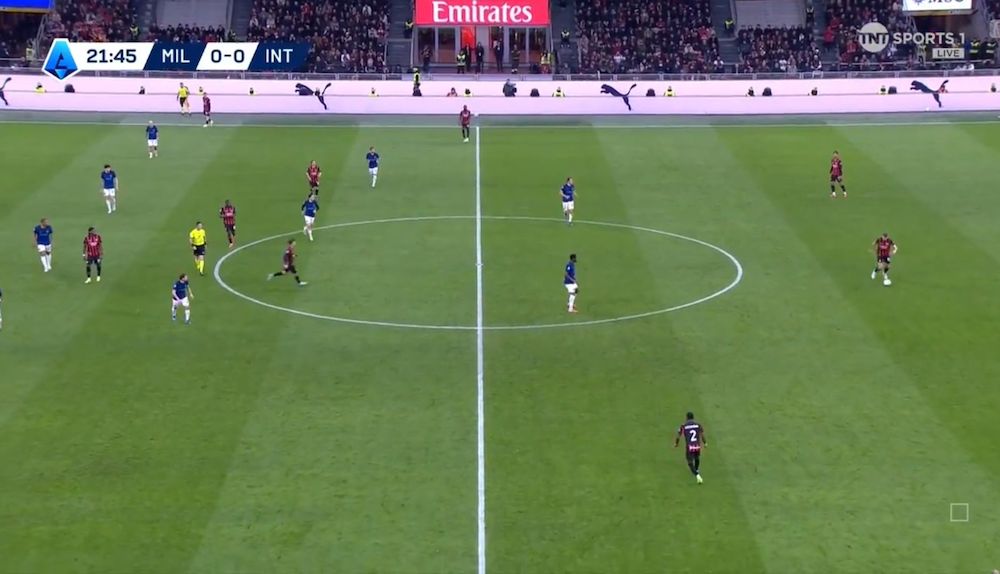
Milan consistently ensured a three-man structure in the first phase of build-up to overload Inter’s two-man pressing line. With Rabiot and Modrić positioned higher up the pitch, Estupiñán showed good game awareness by dropping deeper alongside the defenders.
This adjustment created a numerical 3v2 advantage against Inter’s press, allowing Milan to circulate possession more securely and progress the ball past the first line of pressure.

Chivu’s tweaks
Whenever Inter defended in a mid-to-low block, Chivu positioned his two mezzalas slightly higher than Zieliński, creating a staggered midfield structure.
This set-up was designed to facilitate quick vertical transitions: once possession was regained, the advanced midfielders would combine with the front two – either Pio Esposito or Bonny – using them as bounce options to quickly progress the attack before making forward runs themselves.
This pattern was evident in one sequence where Mkhitaryan carried the ball forward after such a combination and managed to produce a shot on target.

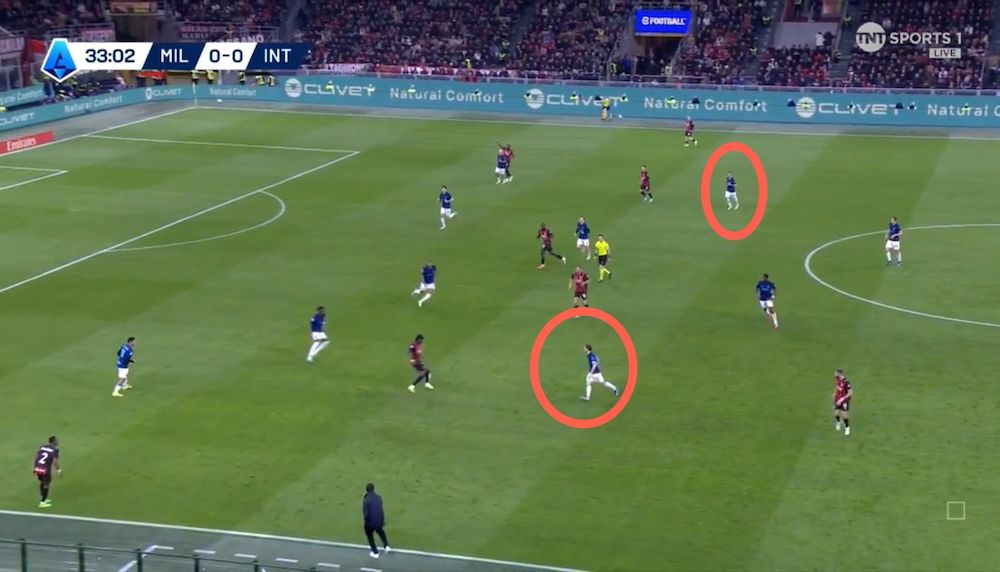
In the second half, Inter pushed their defensive line significantly higher, with the average height rising to around 63.16 metres. This aggressive positioning left more space in behind the back line, providing Milan’s forwards – Pulisic and Leão – with greater opportunities to attack depth and threaten in transition.
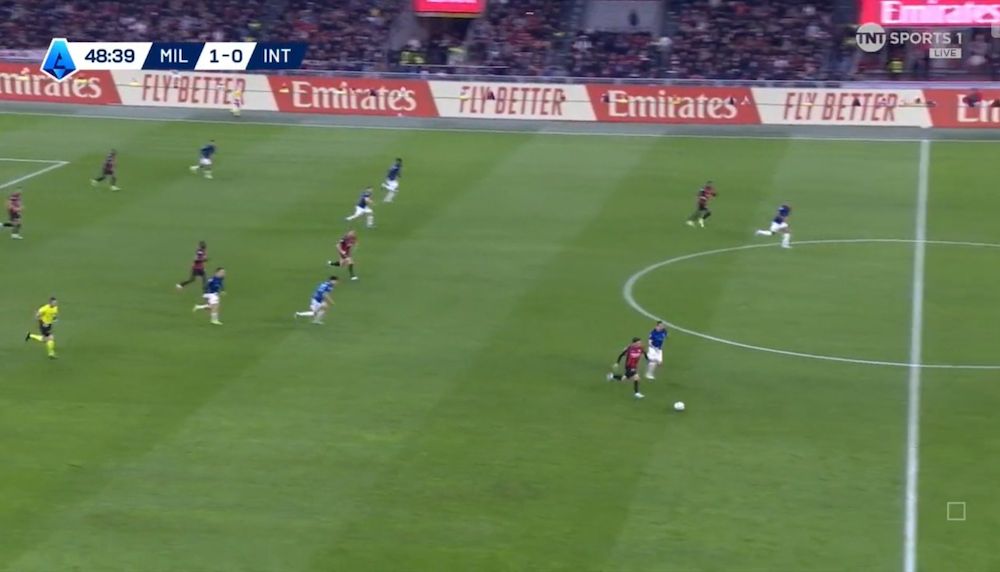
Inter used Bastoni to create numerical overloads on the left side of their build-up, with the centre-back stepping forward to support progression and combine with teammates in that channel. This allowed Dimarco to take up more advanced positions, from where he could deliver crosses into the box and target Inter’s attacking runners.
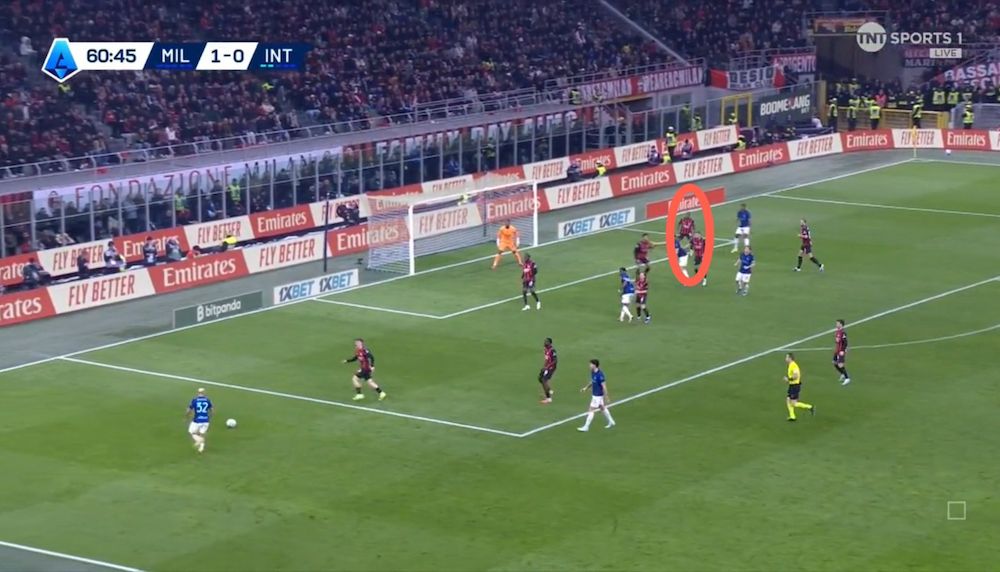
With Henrique proving less effective as an aerial presence inside the box, Chivu introduced Denzel Dumfries to provide a stronger back-post threat. Given his physical stature and proven ability in aerial duels, the adjustment was clearly aimed at exploiting his height and timing to attack crosses, particularly those delivered toward the far-post zone.
Targeting the space
Until the introduction of Füllkrug for Leão, Allegri’s attacking plan was largely focused on exploiting the space left behind Inter’s high defensive line. Milan looked to use pace and direct running in transition to attack the depth, targeting the gaps that emerged whenever Inter pushed their line forward.
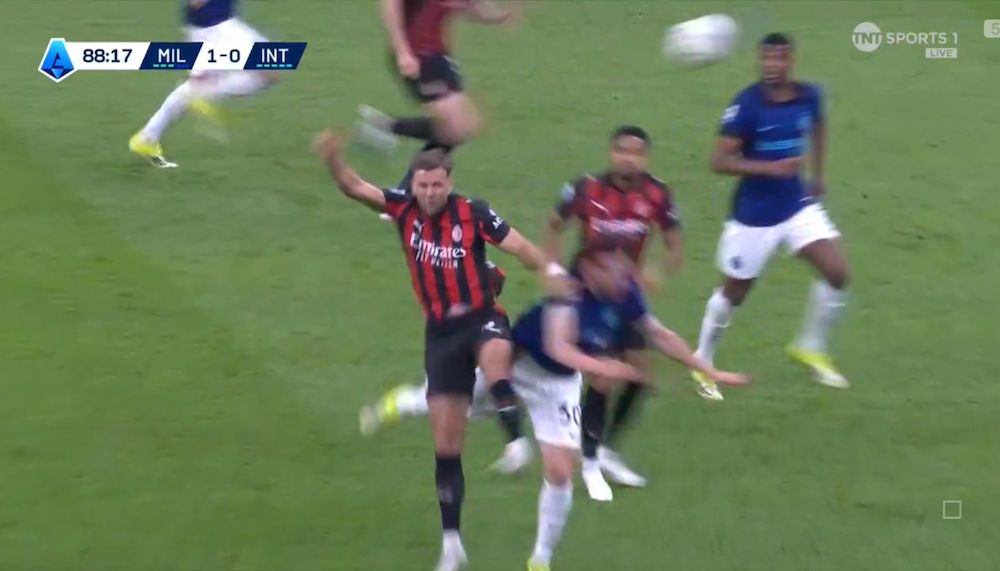
However, once Inter began introducing more attacking substitutions, the game state shifted. In response, Allegri adjusted Milan’s approach, opting to drop deeper and absorb pressure rather than continue pushing aggressively.
The focus moved toward maintaining defensive compactness and managing Inter’s increased attacking presence. Füllkrug was introduced to provide a focal point higher up the pitch, primarily to hold up the ball and relieve pressure when Milan went long.
His physical presence allowed Milan to contest aerial deliveries more effectively, win headers, and secure second balls, helping the team move up the field and sustain possession during defensive phases.
How the goal was born
Milan’s 3+2 structure in the build-up phase proved effective in progressing play. From this base, Modrić was able to switch the point of attack with a cross-field pass to Tomori.

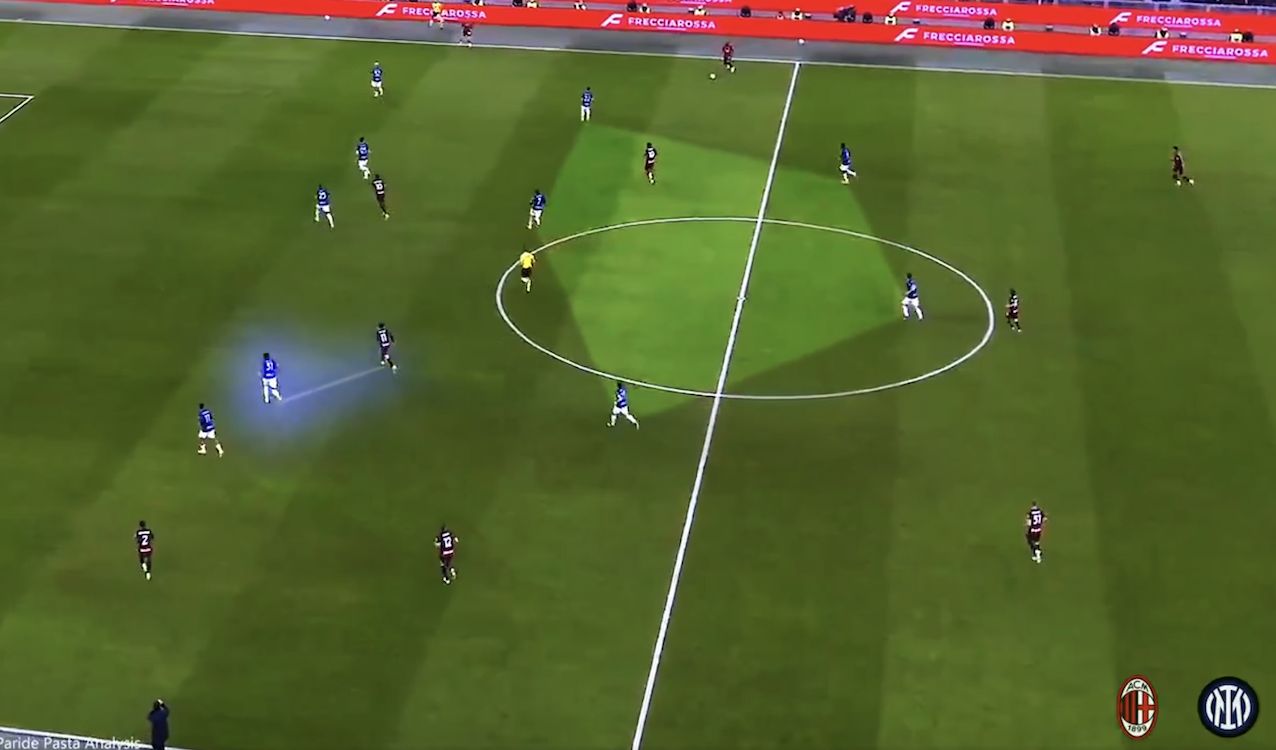
The sequence continued with a quick toco y me voy exchange between Fofana and Leão, which allowed Fofana to advance into a more advantageous position. Meanwhile, Pulisic’s intelligent off-the-ball movement pulled a defender away, creating the lane for Fofana to thread the pass into Estupiñán.
— Rohit Rajeev (@RohitRajee23232) March 9, 2026
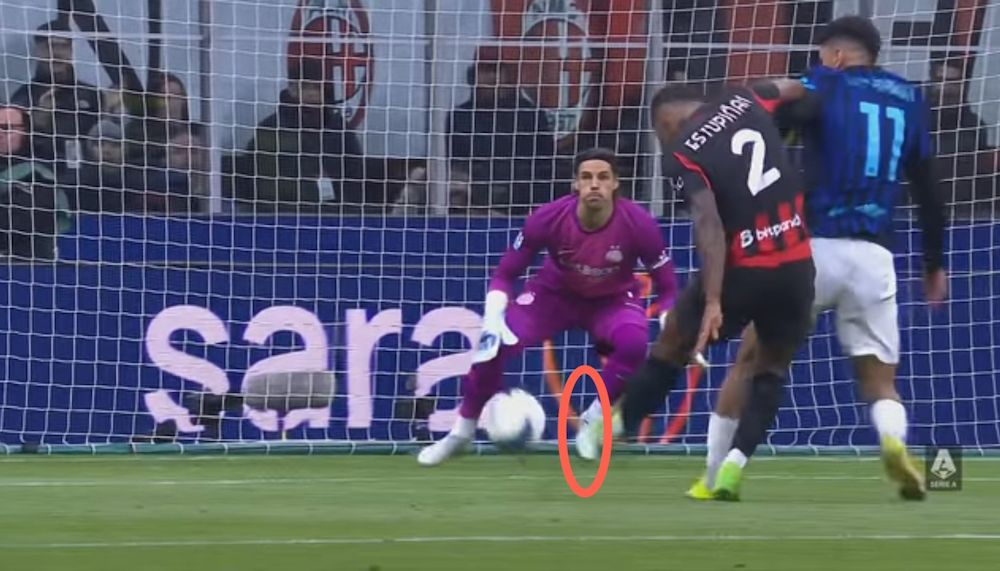
Estupiñán opted for a toe-punt finish rather than a conventional instep drive. The unorthodox technique proved deceptive for Sommer, who was momentarily frozen and unable to commit to a jump or dive. The suddenness and unpredictability of the toe-punt strike disrupted the goalkeeper’s timing, leaving him rooted to the spot as the ball travelled toward goal.
The data
MarkStatsBot has provided some interesting data from the game, starting with the passing network. For Inter, it shows how Dimarco was the furthest forward of any player, demonstrating that they attended to rely on him to create. Bastoni, Barella and Henrique were ahead of the two strikers.
For Milan, a clear pattern of cycling the ball around the back and on the right can be seen, precisely to manipulate Inter’s block and because of the 3+2 build-up. Leao and Pulisic were close in terms of average positioning, while quite a big gap was left on the left flank.


Normally, Luka Modric is up in the top right corner of the graph below, because he progresses the ball by passing and by dribbling it. However, against Inter he almost exclusively passed the ball forward, perhaps a command to protect Milan in transition and because the carrying was done by others.

