
A week of revolution, discussions and unclear ideas has emerged ever since the mass sacking that took place after the last game of the season.
Read SempreMilan ad-free and get access to exclusive news. Click here for a free trial!
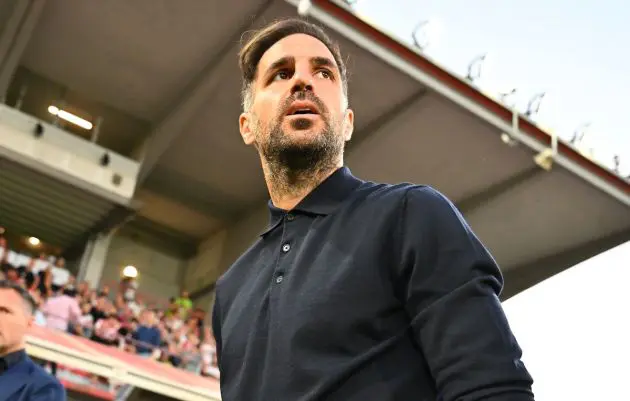
From the halls of power, the desire to find a ‘Fabregas-style’ has filtered out from Casa Milan. It is a label meant to evoke modernity, ideas, proactive football and the ability to develop players. Easier said than done.
Before choosing who will sit on the bench, a club should clarify who makes the decisions, how they are made, and what strategic direction it intends to follow. Instead, Milan are without a CEO, a technical director and a sporting director.
These are roles that represent the backbone of any football organisation’s decision-making process. Yet the priority seems to be the search for a new coach first, to then fit the others around them. While waiting for the decisions, check out bestcasino.com.
This is a mistake in method rather than in substance. A coach cannot be the starting point of a project – rather, he is its consequence. First, the club’s identity is defined, then the management structure that will support it is built, and finally the technical profile most consistent with that vision is identified.
The real problem is that the exact opposite is emerging. Observing the movements and rumors of recent days, on the one hand, there is talk of a search for a coach with very specific characteristics, almost a Fabregas-like profile. The casting seems to follow the opposite logic.
In recent weeks, coaches such as Andoni Iraola, Xavi and Mauricio Pochettino have been linked to Milan. They can certainly be put into the possession-based domination camp, like Fabregas. However, Oliver Glasner and Matthias Jaissle have been linked, as has Arne Slot. These are more ‘gegenpressing’ types.
All these profiles are legitimate, some even very intriguing, but they share one commonality: the difficulty of pinning them down to a single vision of football and club building. If the goal were truly to identify a coach who could be identified with a specific model, the field of candidates should naturally narrow.
Instead, it continually widens, incorporating figures who seem to meet different criteria each time. The result is the feeling that there is no guiding principle, only disconnected assessments. Big clubs cannot afford to give the impression that they are playing by chance, even if they are.