
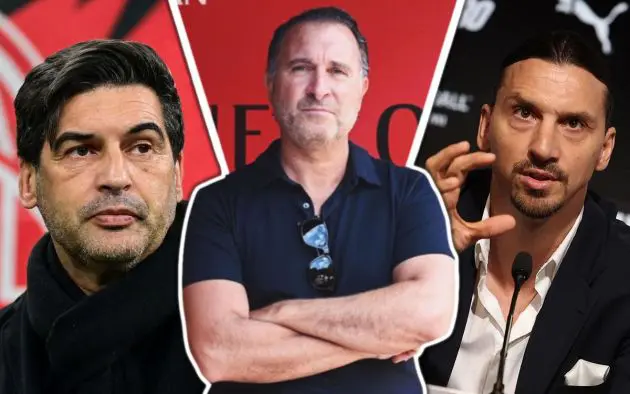
The American era of AC Milan, RedBird Capital-branded to be precise, is now a case study on how the numbers on the balance sheet cannot compensate for sporting failure.
Read SempreMilan ad-free and get access to exclusive news. Click here for a free trial!
While on the one hand the ownership can boast growing revenues (€457m in the last accounts) and investments of over €100m net in the last two seasons on the squad, on the other hand the reality on the pitch tells a completely different story: ninth place in the league, and no European competitions in 2025-26.
Added to this is an indelible stain on the Rossoneri’s history: the relegation of Milan Futuro to Serie D, in their debut campaign. It is something that has never happened before to a second team in Italy, with Juventus and Atalanta instead consolidating their positions.
Milan Futuro: From promise to relegation
A year ago, the birth of Milan Futuro was greeted with enthusiasm. The idea was ambitious: to create a bridge between the Primavera and the first team. Instead, it turned into a nightmare on multiple fronts.
The project began under the sporting direction of Antonio D’Ottavio and the technical guidance of Ignazio Abate, fresh from consecutive appearances in the UEFA Youth League semi-finals and final with the Primavera.
The arrival of Zlatan Ibrahimović – in a role that even he is seemingly having trouble defining -destabilised the entire decision-making system. Abate was removed, apparently for not giving enough playing time to Ibrahimović’s son, Maximilian.


D’Ottavio was also removed later, replaced by Jovan Kirovski, a figure with no experience in Italian football, but a trusted man of the former Swedish striker. The result? Total disorganisation, changes in head coach and a disrupted and poorly managed team, culminating in relegation.
During the season, the Futuro squad was plundered by the first team, often just to make up the numbers on the bench. Talents like Alex Jimenez, Francesco Camarda, Kevin Zeroli and Lorenzo Torriani were used as stopgaps, forced into constant shuttling that compromised their performance and growth.
To make matters worse, Massimo Oddo arrived late to replace Daniele Bonera, called by the club of his heart to save what could be saved. The result was relegation despite the €15m spent, a figure that is bigger than the budgets of some Serie B teams.
First team in disarray
While the youth project collapsed, the first team followed the same fate. The sudden dismissal of Paolo Maldini and Frederic Massara – architects of the second place in Serie A and the semi-final of the 2022-23 Champions League – was only the first sign of a short-sighted management.
So, Cardinale acted like an American, taking inspiration from Hollywood with the transfer market (the damned Moneyball) and taking inspiration from Donald Trump in bringing his courtiers to the palace, ousting the advisors in favour of an echo chamber.
It is an act that led, in practice, Milan to replace Massara with nobody, if not the algorithm, and Maldini – who to many symbolised Milanismo and competence – with an accountant (Giorgio Furlani). From then on, the decisions that would follow would be one disaster after another.
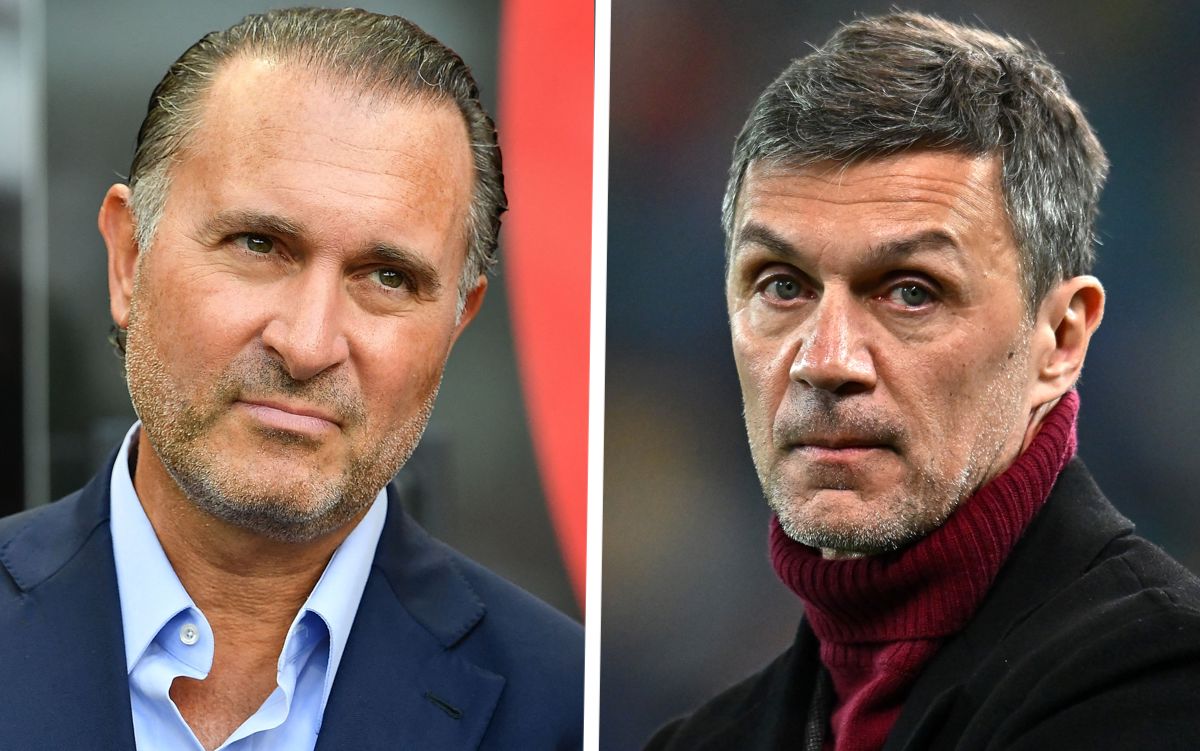
Perhaps even such an arrangement of square pegs in round holes can produce positive work with a unified and collective vision, but this all went out of the window when reports began to surface about the internal power struggle.
Also, there has to be an element of respect for the way things are done in Italy. Season after season the proof is that the team that wins is not the one who tries to circumvent the system but relies on trusted professionals who understand the dynamics. Is it a coincidence that Antonio Conte’s Napoli are battling with Simone Inzaghi and Beppe Marotta’s Inter for the Scudetto?
The purge of those who were not a ‘Yes Man’ created management without weight and vision. Milan have lost their identity, competence and continuity. Unlike in the past, however, today public opinion seems to have understood things and have understood the real culprit of this mess.
The American model has failed
The choice of those in charge to rely on Moneyball-style algorithms, trying to buy under-valued players and to beat the system that has long been established in Italy, has produced a market without vision.
Paulo Fonseca was chosen over other candidates who had won and knew the league better. Rather than put faith in their methods, the management hid behind their failures, presenting them as Fonseca’s when they abandoned him and then sacked him.
He was replaced by Sergio Conceição, whose arrival was not just endorsed by the omnipresent Jorge Mendes but actually forced through, together with the João Félix move. More sacrificial lambs to be fed to the tired and disaffected masses.

After Sunday evening’s defeat to Roma, RedBird’s failure can be considered complete: out of Europe entirely, relegation to Serie D with an expensive project, millions wasted, no tangible growth in talent, and a chasm that has opened up between the club and the fans.
The last two years (and possible more) will be talked about for a long time to come, but in the manuals on how not to manage a football club. The 2024-25 season will be remembered as one of the darkest in the history of Milan.
An incompetent management, incapable of doing justice to the historical excellence of the club, has led to a deep rift with the past and with the fans. Now more than ever, the future of Milan appears shrouded in a thick fog, where it is not money that is lacking, but clarity and ideas.