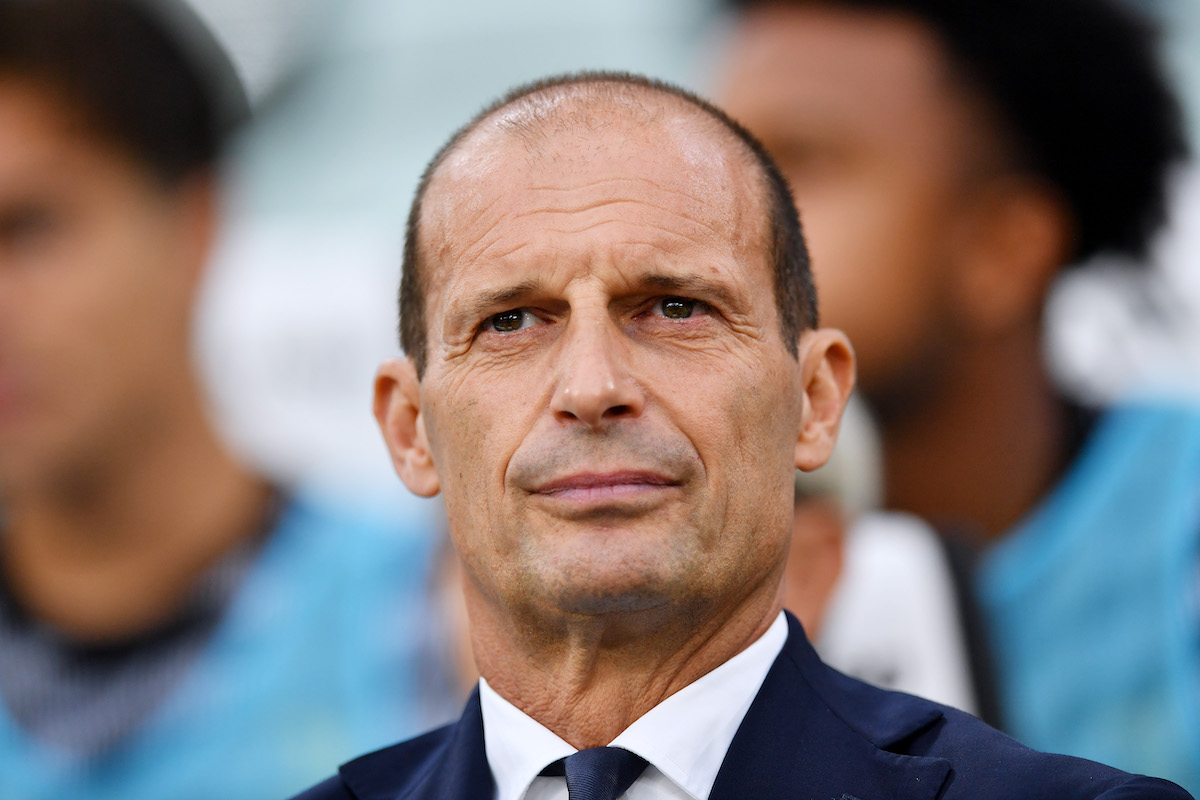
If you want to know what AC Milan will look like with the return of Massimiliano Allegri, you’re in for a complete tactical overhaul.
Milan’s woeful eighth place in Serie A and failure to qualify for European competition has seen the club set to bring back the man who took them to the Scudetto in 2011 for the last time.
Read SempreMilan ad-free and get access to exclusive news. Click here for a free trial!
Allegri’s appointment is not sentimental: it is a strategic decision to restore order following a season of upheaval that has seen two managers spectacularly fail.
Paulo Fonseca managed only six wins in 17 Serie A matches before being given the boot in December, while Sergio Conceição was unable to prevent the club from being eliminated from Europe despite winning the Italian Super Cup.
Why Allegri is Milan’s best bet
You cannot help but ask why Milan chose a 57-year-old manager who has been out of work since leaving Juventus, but the numbers speak for themselves. Allegri’s career record has 11 major titles under his belt, and that all-consuming 2010-11 Scudetto with Milan.
His two-year contract with a third-year option worth €5.5 million per year is a testament to the extent to which the club has in his ability to deliver immediate results. The appointment makes sense on a strategic level when you consider Milan’s desperate requirement for tactical organisation and leadership.
After months of tactical chaos under previous bosses, Allegri brings with him the kind of systematic approach that transforms dirty situations into organised success. His presence in transfer matters alongside sporting director Igli Tare ensures that this is not just a change of coaches, it’s a complete philosophical rebranding.
Tactical revolution: From chaos to control
Allegri’s tactical approach will make you think about Milan playing much differently. While Fonseca liked an attacking 4-2-3-1 with a 3-4-3 flair that exposed the team at the back, Allegri tends to play in a more pragmatic 3-5-2 or 4-2-3-1 style with defensive stability first and only then launching measured attacks.
Serie A analysts are divided on Milan’s prospects under Allegri’s leadership. While some experts believe his pragmatic approach will immediately improve Milan’s defensive record, they conceded 49 goals last season compared to Inter’s 22, others question whether his style suits modern football’s demands.
The betting markets reflect this uncertainty, with Milan’s odds for a top-four finish ranging from 60-70% across major European bookmakers. What’s particularly interesting is how tactical experts compare Allegri’s calculated approach to strategic thinking in other high-pressure environments.
Like EU casino for UK players, carefully analyse odds and make informed decisions based on probability and risk assessment, football analysts suggest that Allegri’s success will depend on his ability to read matches and make the right tactical adjustments at crucial moments.
You’ll likely witness Milan being far more structured in their defensive organisation, with the players maintaining solid positional consciousness. Allegri formations have a tendency to concede 25-30% less compared to more offensive styles of play, depending on clean sheets for their victories.

Squad transformation: Strategic departures and targeted arrivals
The most significant change you will notice is Milan’s rebuilding of the midfield. Tijjani Reijnders’ transfer to Manchester City for €70m deprives the club of its goal-scoring midfielder, a man who tallied 15 goals and four assists in the last season. But Allegri sees it as positive instead of negative.
His reintroduction to former Juventus teammates Nicolò Rovella and Hans Nicolussi Caviglia is not coincidental. Allegri asked for those players in particular because he knows how their tactical sense and grafting fit into his system.
Rovella, in particular, is the type of deep-lying playmaker who thrives in Allegri’s system, delivering the correct passing and defensive reading that makes his tactical game so effective.
Theo Hernández’s departure, whose representative demanded an annual salary of €7 million that Milan promptly rejected, is a statement by the club to build a more harmonised squad structure. While parting with a player of Hernández’s attacking threat appears to be short-sighted, it allows Allegri to establish a more defensive-sturdy left wing.
Building around Rafael Leão: The cornerstone strategy
The decision to construct the team around Rafael Leão is a 2025-26 tactical remedy by Allegri. The Portuguese winger’s pace and ball control are tailor-made for Allegri’s counter-attacking style, presenting the kind of direct danger that has the potential to exploit the more expansive units played by opponents.
You’ll see Leão play with far greater tactical freedom than under other coaches, but within a more solid system. Allegri’s system will provide him with greater defensive cover so that he can focus entirely on creating and scoring chances without compromising the team’s overall balance.
Mike Maignan’s extension, which Allegri has hotly pursued, is a testament to the coach’s understanding that modern-day football success starts behind the goalie. Succeeding distribution from Maignan is perfect for Allegri’s strategic vision.

Realistic expectations and timeline
Don’t expect rapid title contenders; Allegri’s ways take time to get it right. His previous Milan experience took six months to deliver significant improvement, the Scudetto in his first full season. You are witnessing the same timescale again, with qualification for Europe the primary 2025-26 objective.
The tactical improvement should show signs of taking place in 3-4 months, but complete adoption of Allegri’s system requires a full season. His teams typically improve their points tally by 15-20% at the turn of his first season as the players become accustomed to his way of playing.
Allegri’s comeback is not just a coaching change; it’s Milan’s determination to find their winning way again through tactical discipline and strategic vision.
While the near-term challenges are daunting, his proven ability to transform underachieving teams into title contenders makes this appointment Milan’s most logical path back to European football and eventually domestic success.


