AC Milan and Inter will do battle for the second and final time this season tonight at San Siro, and the visions of the two ownerships has been compared.
Calciomercato.com report that Milan and Inter ‘are experiencing an era of incredibly similar financial objectives’. Both are owned by North American funds: the Rossoneri are owned by RedBird Capital, while it is Oaktree Capital for Inter.
Read SempreMilan ad-free and get access to exclusive news. Click here for a free trial!
The pursuit of sustainbility
Analysing the two clubs’ financial statements, we need to return to the immediate post-COVID era. It was from there that the rebirth of these two clubs began.
Milan’s accounts started from a €96m loss, and as a result of Elliott Management’s work, achieved a €6m profit in 2022-23, which was the first of three straight years in profit.
Inter’s, on the other hand, started from a very heavy €246m loss, gradually decreasing to a record €35m profit achieved a year ago. Is was a record season that will inevitably lead to a decline at the end of this year.
For both clubs, the word sustainability means first and foremost one thing: no longer being absolutely dependent on sporting results, especially European ones. This is how Milan managed to remain profitable even without participating in any UEFA competition this season.
As mentioned, the medium-long term objective is similar for both clubs, but the strategy to get there on a sporting level is completely different, or at least it has been so far.
On the one hand, Milan have opted to heavily utilise the player trading strategy, selecting players who are not very old and selling them on as needed, completing huge capital gains. The most striking example of this is Tijiani Reijnders.
This season, with Allegri on the bench, the trend has changed slightly with the signings of Luka Modric and Adrien Rabiot, which have brought the Rossoneri closer to the Nerazzurri’s strategy.
Inter meanwhile in recent years has chosen to minimise the impact of player trading and amortisation from high transfer fees, consolidating a high-quality squad (including wages) that would lead to very sporting results (and therefore revenues). Last summer, a process of rejuvenating the squad began.
The future
According to data reported by Football Benchmark – the statistical portal that annually collects data on the corporate values of clubs and players – from 2016 to today the value of Milan and Inter has increased exponentially (although remaining outside the world top 10).
Milan rose 232%, with an estimated value of €1.8bn. Inter, on the other hand, rose 330%, reaching €1.72bn. These figures are certainly far from Real Madrid’s €6.3bn valuation, but they offer significant room for global growth.
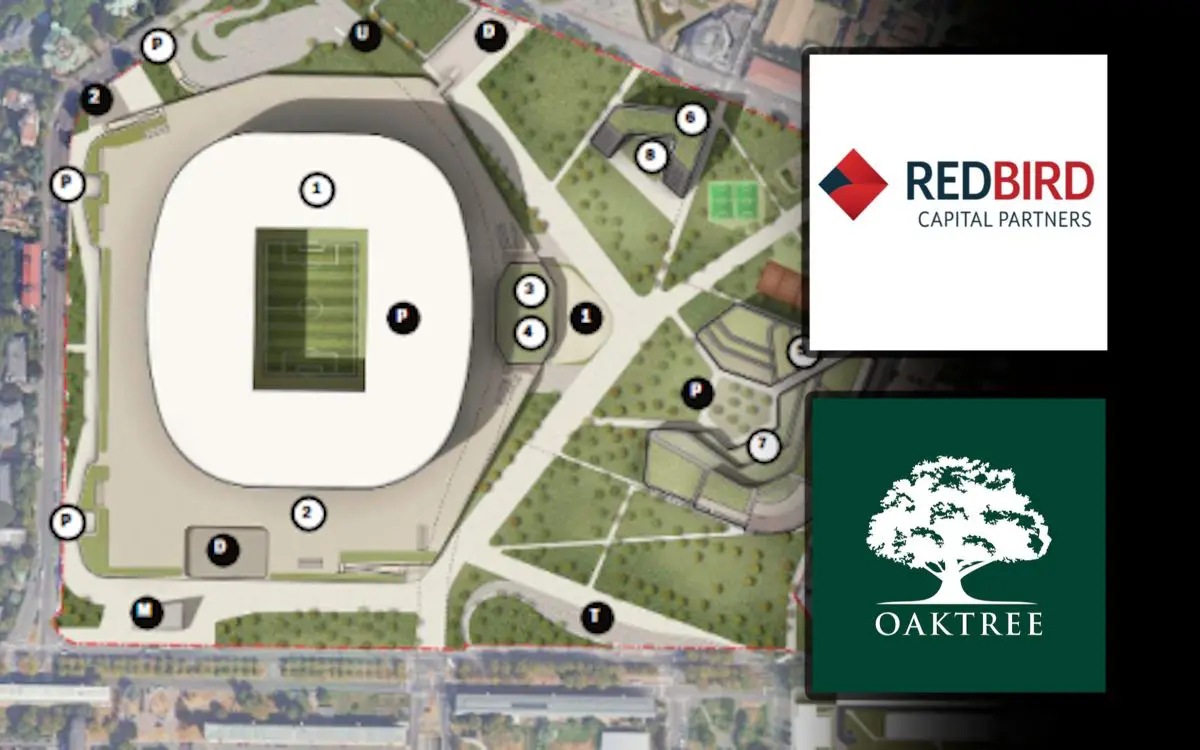
How will they grow more? The two clubs know that the answer to this is very simple. Milan and Inter have chosen to build a new stadium together, because of the additional revenues it unlocks, and the ability to modernise.
The process for building a new stadium by 2030/2031 has already begun, and that will be the key date for the explosion of the two clubs’ revenues. Will RedBird and Oaktree still be there?


