
Franco Baresi has left us, but his memory will live on forever. Most importantly, his journey will continue to inspire the footballers of today.
Today’s edition of Gazzetta dello Sport (see featured image) has dedicated several pages to the Milan legend, who passed away yesterday at the age of 66. He was forced to surrender in his final and lethal match, having fought against illness in the last few years.
Read SempreMilan ad-free and get access to exclusive news. Click here for a free trial!
He always held his head high, though, and his journey is an inspiration to everyone. It’s a journey that the pink newspaper has looked back on…
Tremendous character
Accustomed to facing one obstacle after another, Baresi displayed exceptional determination from a young age. He excelled at the Oratory Sports Union of Travagliato, a town in the province of Brescia, and in 1974, he joined a family he has never left behind: AC Milan.
It was at the recommendation of USO director Guido Settembrino, and as fate would have it, his older brother Beppe (two years older) signed for Inter’s youth team. Franco, meanwhile, was rejected by the Nerazzurri and brought in by the Rossoneri.

It was thanks to the instinct and cunning of Italo Galbiati, who was impressed by Franco’s technique. With a blond bob and good feet, his almost ephebic appearance and elegant touch often deceived opponents, only to change their minds at the first tackle.
The masseur Mariconti gave him a nickname, Piscinin, which means ‘little one’ in Milanese dialect. That became an unmistakable trademark.
Early success at Milan
The first sign of success at Milan came with Nils Liedholm on the bench, giving Franco his Serie A debut on April 23, 1978. The match ended 2-1 for Milan, a promising result, which for someone as superstitious as Il Barone was no small feat.
However, the Swedish coach didn’t simply bring Baresi into the first team as a lucky charm: he took him seriously, making him one of the key players the following season, culminating in the club’s long-awaited and almost enchanted star.

It was immediately clear, without half measures, that Baresi hadn’t become Italian champion by chance. In fact, one of his supporters was none other than Gianni Rivera, the leader who saw the potential of a champion in the young defender.
It wasn’t just a question of technique, but of character and genius. So much so that the Golden Boy himself, during a match in the Città di Milano tournament at San Siro against Flamengo, heard Baresi call out: “So, can you pass me?” Rivera wasn’t offended. Instead, he applauded Franco’s courage.
He sensed that the libero, who doesn’t speak much, not only knows how to handle the ball and direct the defence, but also knows how to make his voice heard. So much so that at just 22 years old, Baresi was promoted to AC Milan captain.
Tougher times
The start was successful, in other words, but it was also followed by severe disappointments. The first relegation to Serie B after the Totonero scandal was a severe blow, but an immediate return to Serie A allowed him to shine for Enzo Bearzot’s national team.
Franco continued his upward trajectory, but faced another setback. He contracted a virus that forced him to be sidelined for three and a half months. Many questioned his future, which was uncertain at 21, but he fought hard and got back on track, more determined than ever.
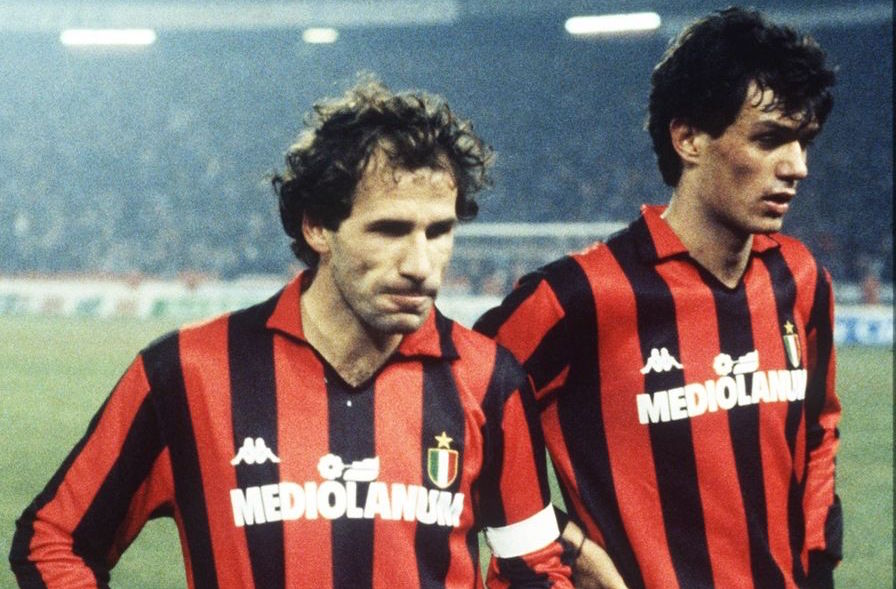
However, he was unable to avoid another blemish, another relegation, in 1982. He was still called up for the Italian team’s World Cup campaign in Spain. Baresi never played, but he still finished with a flourish, winning the final in Madrid.
The golden era
Riding the wave of euphoria, Baresi was courted and sought after by major clubs. He had now achieved the status of a top emerging talent, yet, despite the offers, he decided to stay at Milan.
His unwavering faith paid off in the following seasons. Franco remained the cornerstone of a team that, unfortunately, suffered from frequent corporate turmoil until Silvio Berlusconi arrived on the scene in 1986.
The president saved the club from bankruptcy and launched an ambitious revitalisation program, which initially raised some eyebrows among the players themselves.
The next turning point came in 1987 with the arrival of Arrigo Sacchi. The beginnings under the legendary coach were not easy, far from it, but Baresi soon proved to be one of the finest interpreters of football and of Sacchi’s style.
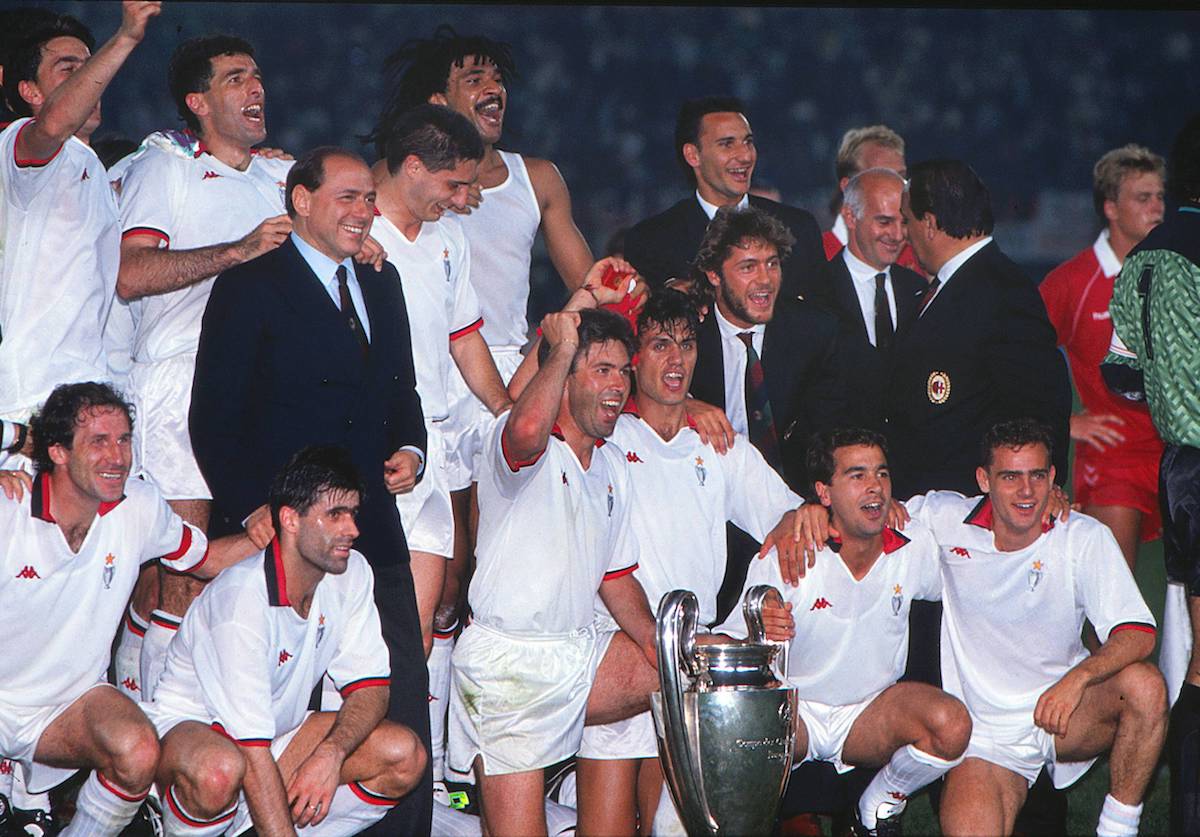
With the additions of Gullit and Van Basten, Milan returned to winning the Scudetto in 1988, and with the addition of Rijkaard in 1989, they even triumphed in the European Cup. These were years of undisputed dominance, especially in Europe, with a repeat in 1990.
Baresi lifted trophy after trophy, yet never lost his composure: he didn’t shout, he just looked at you and you knew what to do, without the need for any show.
Fighting back… again
After Sacchi’s replacement with Fabio Capello, another important challenge arose for Baresi. Many believed he and his teammates were at the end of their tether. Capello, who as a player had no particular connection with Baresi, stung the pride of both the leader and the survivors of the Sacchi era.
The move worked wonders, and the Rossoneri took home four more league titles and the 1994 European Cup. Meanwhile, Baresi was racking up appearances for the national team; for Sacchi, as coach, he was untouchable.
Franco, however, decided to retire with the Azzurri in 1992. Arrigo asked him to reverse his plan, and he succeeded, and was right: Franco led the national team to the 1994 World Cup in America, where they lost on penalties in the final against Brazil.

Baresi was the first to miss from the spot and was inconsolable. His tears on live TV moved all of the Italians. A reserved man, but with strong feelings. With his wife Maura, whom he met in Tuscany in the early 1980s, he has two sons: Edoardo and Gianandrea.
Franco eventually retired from the national team and had more time to dedicate to his family. He enjoyed a moment with the 1996 Scudetto, but the years take their toll. The 1996-97 season didn’t start well with Tabarez on the bench, and ended badly with Sacchi’s second tenure.
Baresi decided to retire in June 1997, and so his No.6 was retired too. Franco was appointed vice-president of the club and took charge of the Primavera team.
In 2002, he had his only stint away from AC Milan. He was hired as technical director by Fulham, who had just been promoted to the Premier League. However, his Premier League adventure lasted just under three months due to disagreements with coach Jean Tigana.
Since then, his bond with AC Milan has been unbreakable. And always will be. All rise for Piscinin.


